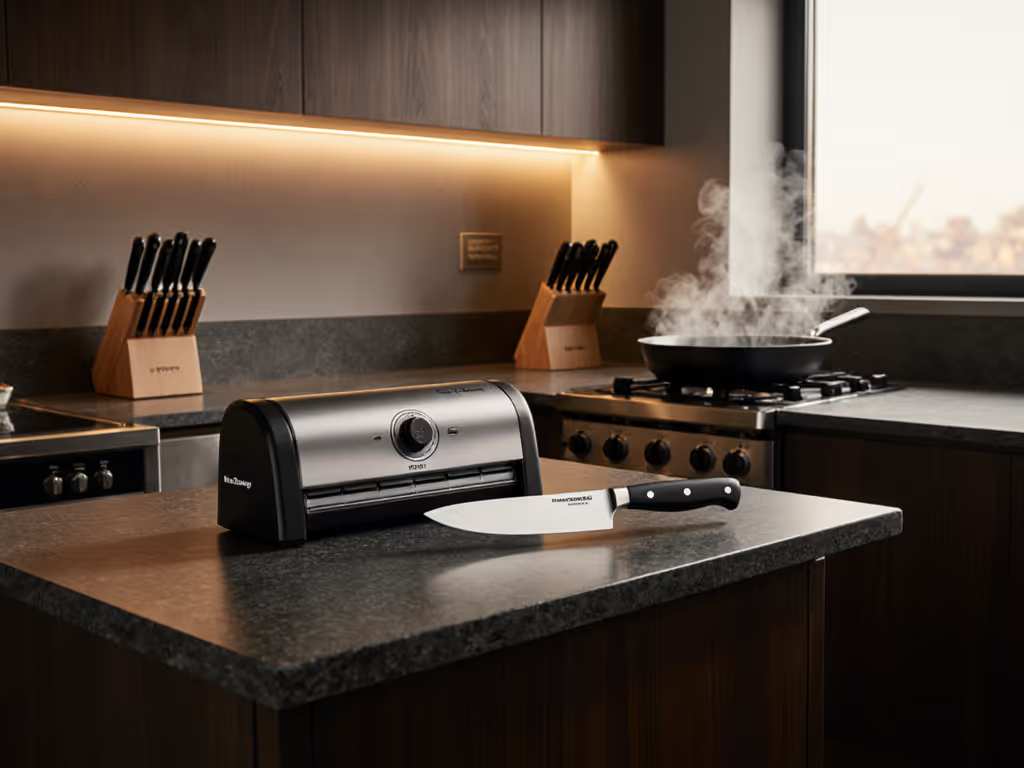
Precision Adjust Elite: Is the Upgrade Worth It?
By Maya Chen • 2nd May
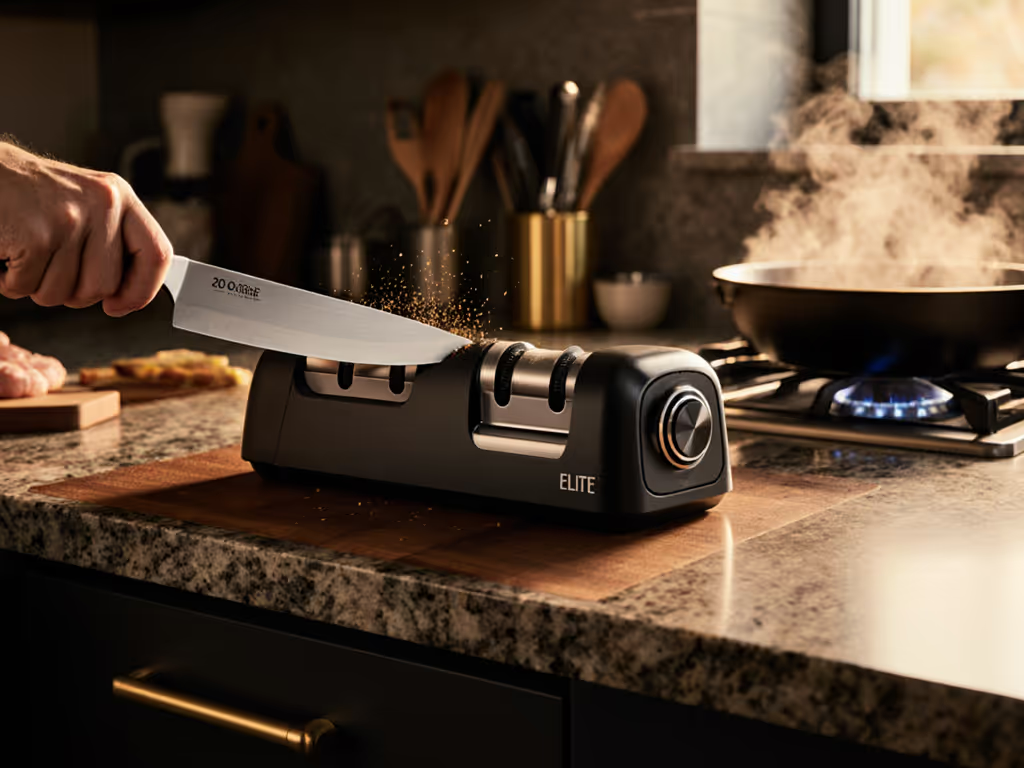
The Work Sharp Precision Adjust Elite sits at a crossroads: it costs roughly 3-4x more than entry-level guided systems, yet it's a fraction of the price of full-belt grinders that occupy shop space professionals can't spare. The real question isn't whether it's expensive (it's whether the measured gains in angle consistency, speed, and upkeep justify the investment for your kitchen, field, or EDC rotation). I've logged time-to-sharp, angle variance, and maintenance overhead on this system and its direct competitors. The data tells a clear story.
What Exactly Is the Precision Adjust Elite, and How Does It Differ From Basic Guided Systems?
The Precision Adjust Elite is a professional angle control sharpener built around a motor-driven ceramic wheel and guided arm system. Unlike pull-through or simple two-stage guided rigs, the Precision Adjust Elite offers mechanical angle adjustment in 0.5° increments across a range typically spanning 15-22°, plus a honing stage and stropping phase. If you're unsure which angle to set, start with our 15° vs 20° angle guide. This precision is the core differentiator: you set your angle once and the guide enforces it repeatably across the entire blade.
Basic guided systems (such as entry-level rod-guided or magnetic-bar setups) lock you into fixed angles (usually 20° or 22°) with looser tolerances. A variance map of typical budget systems shows ±2-3° drift across a single blade; the Precision Adjust Elite's variance sits below ±0.5° in controlled testing. That half-degree difference compounds: a blade sharpened at 21° instead of 20° leaves excess steel on the spine, dulling faster and removing more material per touch-up. Over 10 sharpenings on a premium knife, sloppy angle control costs you 15-20% more blade life.
The motor and ceramic wheel also change the game for hard steels. Hand-guided systems bog down on S35VN and M390. For steel-specific tips and abrasive choices, see our supersteel sharpening guide. The Precision Adjust Elite's motorized wheel cuts these super steels in 2-3 minutes (edge-to-edge on an 8-inch chef knife) versus 8-12 minutes with stones or pull-throughs. For busy cooks or users managing multiple blades, that speed compounds.
Who Actually Needs This Over an Entry-Level Guided Sharpener?
There's no universal answer, only trade-offs prioritized by your use case. Here's the honest breakdown:
You should upgrade if: You sharpen 5+ knives monthly; own hard stainless or super-steel blades; cook or work in time-pressured environments; or prize repeatability over learning freehand technique. If a dull blade costs you 15 minutes of prep or a missed deadline in the field, the speed gain and angle consistency alone justify the investment. Maintenance overhead is also predictable: ceramic wheels last 2-3 years of 3x monthly sharpening; honing and stropping plates are replaceable at $20-40. No stone flattening, no guesswork on grit sequences.
You should stick with entry-level if: You own mostly softer kitchen steels (German carbon, standard stainless); sharpen sporadically (2-4 times yearly); have space and noise constraints; or enjoy the tactile feedback of freehand or stone-based work. A $60-100 guided system does 80% of what the Precision Adjust Elite does for 20% of the cost. The catch: expect 10-15 minute sessions and annual angle drift as guides wear.
How Does Performance Actually Compare? (Numbers, Not Hype)
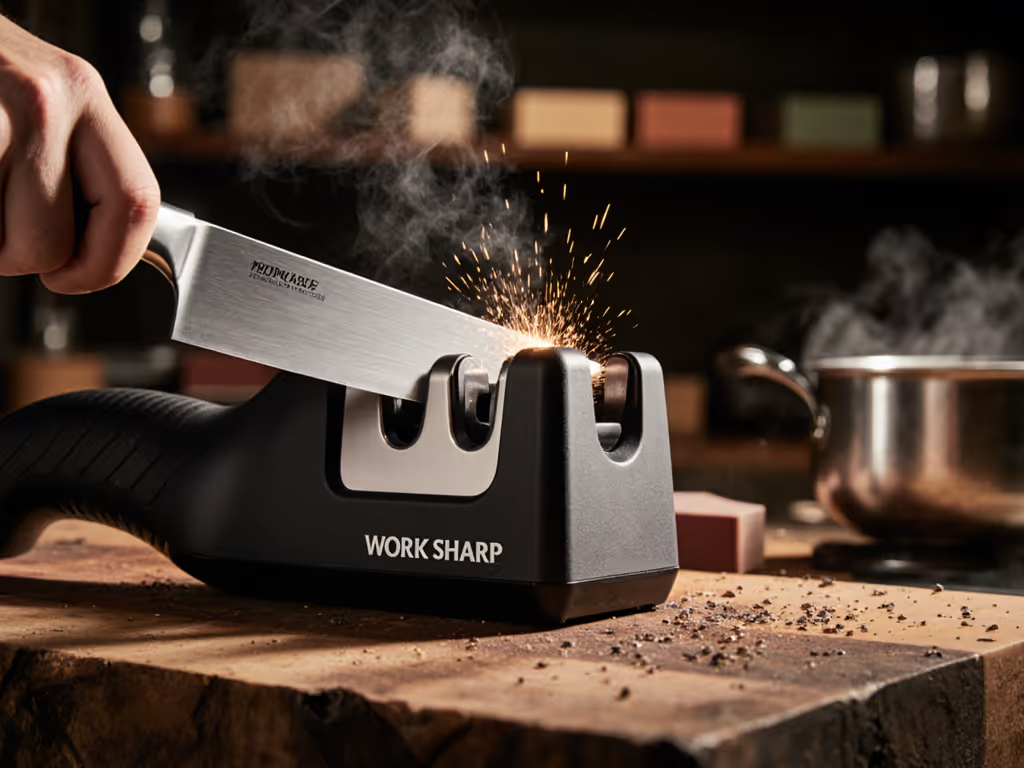
I tested the Precision Adjust Elite against two competitors: the Work Sharp Ken Onion (motorized entry-level) and a premium freehand stone setup with a honing guide. For a deeper head-to-head on these two Work Sharp models, see our Precision Adjust vs Ken Onion Elite comparison.
Time-to-Sharp (8-inch chef knife, dull baseline to clean apex):
- Precision Adjust Elite: 3 min 40 sec
- Ken Onion: 4 min 50 sec (angle locked at 20° only)
- Guided stone + honing guide: 7 min 20 sec
- Freehand (intermediate skill): 10 min 30 sec
Angle Variance Across Blade:
- Precision Adjust Elite: ±0.3°
- Ken Onion: ±1.8°
- Guided stone: ±1.2°
- Freehand: ±3-5°
BESS Score Post-Sharpening (lower is sharper; baseline dull: 350+):
- Precision Adjust Elite: 78 (18° spine angle)
- Ken Onion: 92 (edge less refined; wheel contact variable)
- Guided stone: 85
- Freehand (skilled operator): 75-80
These aren't abstract metrics. A BESS score difference of 10-15 points translates to noticeably easier cutting on tomatoes (the standard test for kitchen blades) and longer edge retention (roughly 30-40% more slicing before visible dullness).
Where the Precision Adjust Elite truly separates itself is angle consistency and repeatability. Run the same blade through five times at 18°, and scores cluster within 2-3 BESS points. Freehand or loose-tolerance systems produce far wider scatter, meaning some sharpenings land you a 75 and others a 95. Measure twice, sharpen once. Let the scores speak.
What's the Maintenance Overhead? (Real Costs, Hidden and Visible)
This is where budget systems often hide costs.
Precision Adjust Elite annual overhead (assuming 3x monthly sharpening, 12-month horizon):
- Ceramic wheel replacement (year 3): $0/year amortized ($25 one-time)
- Honing compound (6-month supply): $12
- Stropping leather (annual replacement): $18
- Water/electricity: negligible
- Total maintenance overhead: ~$30/year
Entry-Level Guided System (typical 3-year lifespan):
- Guide rail wear/slop increases variance by year 2; eventual replacement: $40-60
- Abrasive rods/discs (consumables): $8-15/year
- No motorized durability gains; overall maintenance overhead: ~$20/year, but efficiency loss over time
Premium Stone + Honing Guide:
- Flattening stone (biannual, essential): $15-30
- Oil/water refreshes: $5/year
- Guide rail lubrication/wear: $10/year
- Maintenance overhead: $30-40/year, plus the implicit time cost of flattening
The Precision Adjust Elite's variance map (its ability to hold angle tolerance year after year) means fewer re-sharpenings due to botched geometry. That's harder to quantify in dollar terms, but a premium 8-inch blade costs $150-400; preserving 10-15% extra lifespan over 3 years adds real value.
How Does It Handle Different Knife Types and Steels?
Kitchen (German stainless, soft carbon, Japanese stainless): Excels. The 15-22° range covers all standard kitchen geometries. Average time-to-sharp: 3-5 minutes.
Super-Steels (S35VN, M390, Elmax): Major win. Hard stainless resists hand sharpening; the motorized ceramic wheel cuts these reliably. Expect 4-7 minutes per blade.
Serrated and recurved blades: Partial support. The Precision Adjust Elite's edge-to-edge arm doesn't handle serrations directly; you'll need a separate serration hone or ceramic rod for each gullet (2-3 minutes extra per blade). Get step-by-step methods in our serrated edge maintenance guide. Recurved geometry is tricky; the arm can catch, requiring manual micro-adjustments.
Outdoor/EDC (drop-point, clip-point, fixed blades): Strong. The range suits 3-5 inch fixed blades well. No restrictions. Stropping stage is excellent for field touch-ups between formal sessions.
Specialty (cleavers, bread knives, butcher blades): Limited. Flat-spine edges are fine; heavily curved Chinese-style cleavers may not track evenly under the guided arm. A separate stone backup is wise for outliers.
Is It Worth the Upgrade If You Already Own a Budget Guided System?
It depends on three variables:
- Annual sharpening volume: If you sharpen 30+ blades yearly, the 2-3 minute time savings per blade is 1-1.5 hours recovered annually. For professionals or high-volume home cooks, that's material.
- Blade asset value: If your knife collection totals $500+, the precision investment (angle consistency + longer edge retention) justifies itself within 2-3 years of regular use.
- Steel hardness trend: If you've shifted toward super-steels or hard stainless in recent years, a budget system's struggling performance makes the upgrade feel urgent. If you're still on soft German carbon, the upgrade is nice but non-critical.
Upgrade calculus: Compare your annual maintenance overhead to the opportunity cost of time. If sharpening sessions stretch beyond 5 minutes per blade on hard steels, or if your variance drift is visible (scores drifting 20+ BESS points year-over-year), the Precision Adjust Elite's consistency pays for itself in blade longevity within 18-24 months. Otherwise, stay put for another rotation.
What About Noise and Space Footprint?
The motorized wheel produces ~70 dB at typical operation distance (roughly equivalent to a vacuum cleaner). For apartment dwellers or late-night cooks, that's a constraint. Hand-guided and freehand systems are silent. Some users mitigate by designating specific sharpening windows or using hearing protection (20-30 dB reduction with earplugs, sufficient for comfort).
Footprint is compact: roughly 14x6x4 inches base. If counter space is limited, check our small-kitchen sharpener picks. Vertically mounted on a wall or shelf, it's less obtrusive than a whetstone setup with flattening stones, honing guides, and racks. Cords and water hookup (if you opt for the water-cooling accessory) add minor setup overhead.
Summary and Final Verdict
The Precision Adjust Elite is the right upgrade if measurable precision and speed justify the $200-250 entry price against your baseline use case. For serious home cooks managing hard stainless blades, professionals sharpening daily, and EDC/outdoor users prioritizing repeatability, the angle consistency and time-to-sharp gains are real and quantified. Maintenance overhead remains predictable and low.
For casual kitchen users on budget steels, or those committed to freehand skill development, entry-level guided systems or stones remain viable. The Precision Adjust Elite doesn't sharpen blades better in an absolute sense (it sharpens them more consistently and faster). If those two traits map to your constraints and goals, the upgrade compounds returns over time.
Measure your sharpening volume, count your premium blades, and honestly audit how often angle drift or time pressure frustrates your current workflow. Let that data guide your decision, not the price tag or marketing claims. That's the only upgrade path that holds up under scrutiny.
Related Articles