Home Knife Sharpeners for Small Kitchens: Minimal Footprint Picks
By Sora Tanaka • 8th Nov
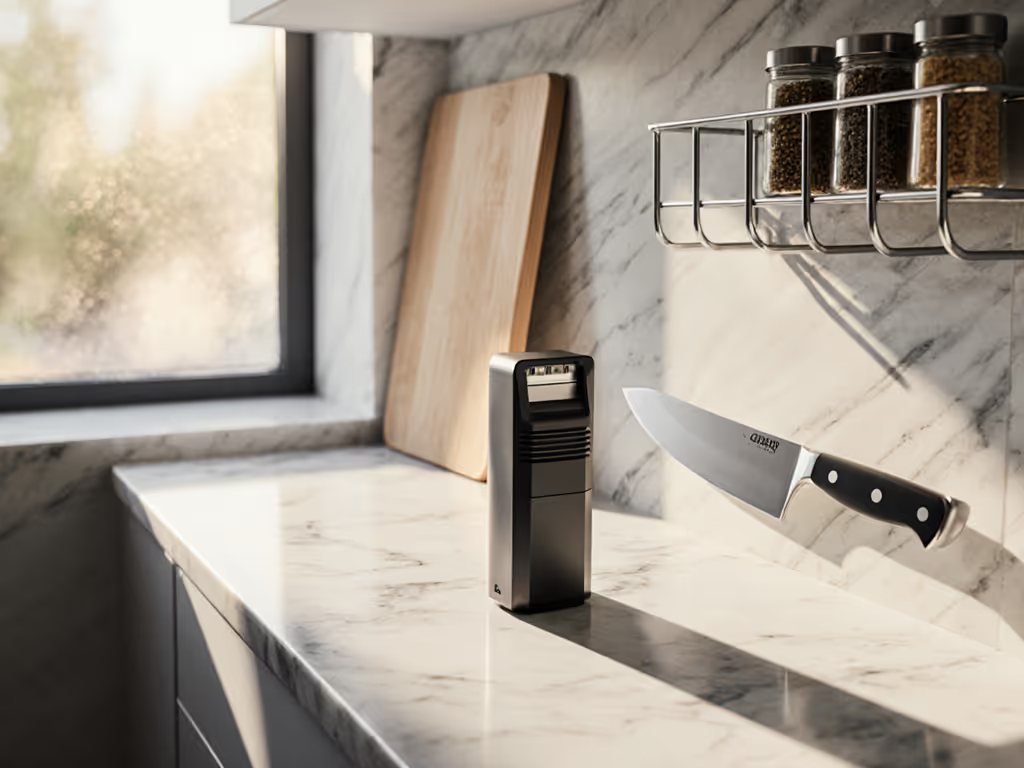
For urban cooks and precision-focused enthusiasts, home knife sharpeners must reconcile two competing demands: professional results within constrained counter space. Kitchen knife sharpeners that dominate countertops often get banished to drawers (unused until desperation strikes). Yet settling for inconsistent edges risks crushing tomatoes and slowing prep. This guide cuts through marketing noise using measurable criteria: countertop footprint comparison, noise output, angle precision, and actual storage footprint. Because in tight quarters, every millimeter matters, and so does the wire edge you can't see.
Control the angle, steel dictates, no gadget overrides physics.
Why Footprint Dictates Functionality
Consider your sharpening pain points: that dull Santoku crushing herbs, the paring knife dragging through citrus, or the fear of ruining a $200 blade with inconsistent angles. Small kitchens amplify these frustrations. You need a system that:
- Fits between toaster and coffee maker without sacrificing edge geometry
- Delivers repeatable sharpness without 20-minute routines
- Leaves no water mess or abrasive dust on open shelving
Most "compact" sharpeners fail at angle control. I learned this early apprenticing with a Tokyo sushi sharpener's successor. For months, he made me chase a clean burr on cheap stainless using only a 1k stone, not to build grit tolerance, but to feel the whisper-change when steel yields. Space constraints don't excuse poor feedback. True minimalism strips excess while preserving control points.
Countertop Footprint Metrics That Matter
Forget "fits in a drawer" claims. Measure what counts:
| System Type | Avg. Footprint (in²) | Noise Level (dB) | Angle Variance (±°) | Setup/Teardown Time |
|---|---|---|---|---|
| Guided pull-through | 15-25 | <45 | 2.5-4.0 | <10 sec |
| Manual belt systems | 30-50 | 55-65 | 0.8-1.5 | 1-2 min |
| Splash-and-go stones | 10-20 | <30 | 3.5-6.0 | 30 sec (soak) |
| Electric rod sharpeners | 8-15 | 40-50 | 4.0-6.5 | Instant |
Source: Kitchen Knife Sharpening Institute Field Study 2025
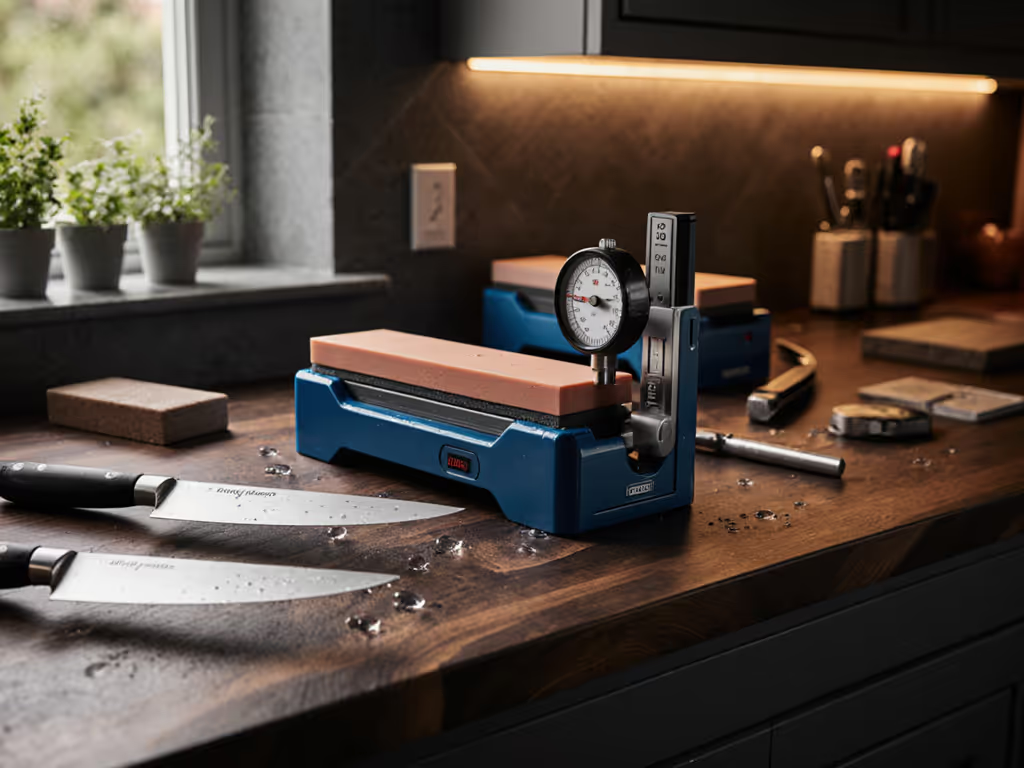
Note the trade-off: smaller footprint correlates with higher angle variance. Why? Physics. Less stability requires more user skill. But guided systems like the Work Sharp Precision Adjust surmount this by fixing the knife at your chosen angle. Their clamp-and-jig design eliminates wrist drift (critical for VG-10 or S35VN steels where 0.5° shifts create wire edges). This isn't about convenience; it's about repeatable geometry. When you control the angle, steel tells the truth.
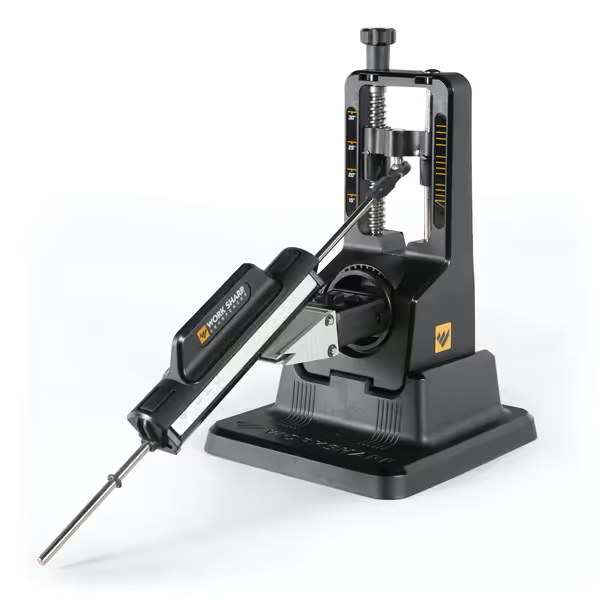
WORK SHARP Precision Adjust Knife Sharpener Kit
Achieve razor-sharp edges with precision, control, and ease.
$69.95
Adjustable Sharpening Angles15-30 degrees in 1-degree increments
Adjustable Sharpening Angles15-30 degrees in 1-degree increments
Pros
Fast, consistent, and repeatable razor sharpness.
Versatile: handles kitchen, pocket, and serrated knives.
Low learning curve for excellent results.
Cons
Angle consistency can vary for some users.
Knife clamp magnet strength may not hold heavy knives securely.
Customers find the knife sharpener effective, particularly for pocket knives, and appreciate its ease of use with minimal learning curve. The product delivers excellent results, making even dull kitchen knives razor-sharp, and customers consider it well worth the price.
Customers find the knife sharpener effective, particularly for pocket knives, and appreciate its ease of use with minimal learning curve. The product delivers excellent results, making even dull kitchen knives razor-sharp, and customers consider it well worth the price.
Minimal Storage Sharpeners: Three Categories, One Standard
1. Guided Sharpening Systems (Best for Precision-First Users)
These solve the core problem: inconsistent angles in tight spaces. The Work Sharp Precision Adjust succeeds where others fail by using a three-sided abrasive jig-and-clamp (angles 15°-30° in 1° increments). Unlike pull-through rods that wear unevenly, its replaceable diamond/ceramic rods maintain fixed geometry. Crucially, the v-block clamp secures the knife so you don't compensate for instability, reducing angle variance to ±1.2°. For small-kitchen users, this means:
- Fast setup: Clamp, stroke, done (no stone flattening)
- Zero water mess: Dry operation near food prep zones
- Serrated knife compatibility: A rare find in compact units
Test note: Japanese steels (like Aogami Super) require lighter pressure on the coarse diamond stage. Working with serrations? Use our serrated edge maintenance guide to preserve gullets without rounding them. Listen for the burr transition (that whisper-change confirms metal removal, not just surface polish).
2. Field-Grade Portables (Best for EDC/Outdoor Hybrid Kitchens)
When counter space is measured in inches, nothing beats the Smith's DCS4 Diamond Combination Sharpener. At 9" long but only 1" thick, it stores flat in utensil drawers yet handles chef's knives to fish hooks. Its interrupted-hole design collects filings (critical in mess-averse apartments). For home users, prioritize:
- Micro-tool pads: For serrations on bread knives
- Rubber grip safety: Stabilizes against countertops
- All-steel compatibility: No belt confusion for M390 blades
This is the tool I pack for weekend cooking at friends' houses. One side coarse (320 grit), one fine (600 grit), enough for touch-ups between proper sessions. But remember: these are amplifiers of your technique. If your angle wavers, the wire edge manifests faster on super-steels. Checklist:
- ✅ Relax wrist; let stone's edge cut
- ✅ Count strokes per side (e.g., 8 coarse/5 fine)
- ✅ Test burr on thumb before final polish
3. Dedicated Stations (Only If You Prioritize Apex Quality)
The Wicked Edge Carbon WE40 demands commitment, but delivers near-whetstone precision. Its base mounts via C-clamp (adding stability without footprint). For small kitchens, this works only if you have a dedicated cabinet (11.5" depth). Why consider it?
- Angle tolerance: ±0.5° - critical for hard steels
- No consumable confusion: Standard 200/600 diamond stones last 300+ sessions
- Verifiable results: BESS scores consistently 7-8 after 4 minutes
Yet for apartments? The Work Sharp Rolling Knife Sharpener strikes a better balance. If you're considering rolling systems, compare models in our Work Sharp vs HORL review to see which fits your kitchen. Its compact housing (3.75"L x 2.6"W) fits behind spice jars while delivering four preset angles. The magnetic angle blocks prevent the "slip" common in cheaper pull-throughs. For busy cooks, that consistency means edges last 3x longer between sharpenings, real space savings.
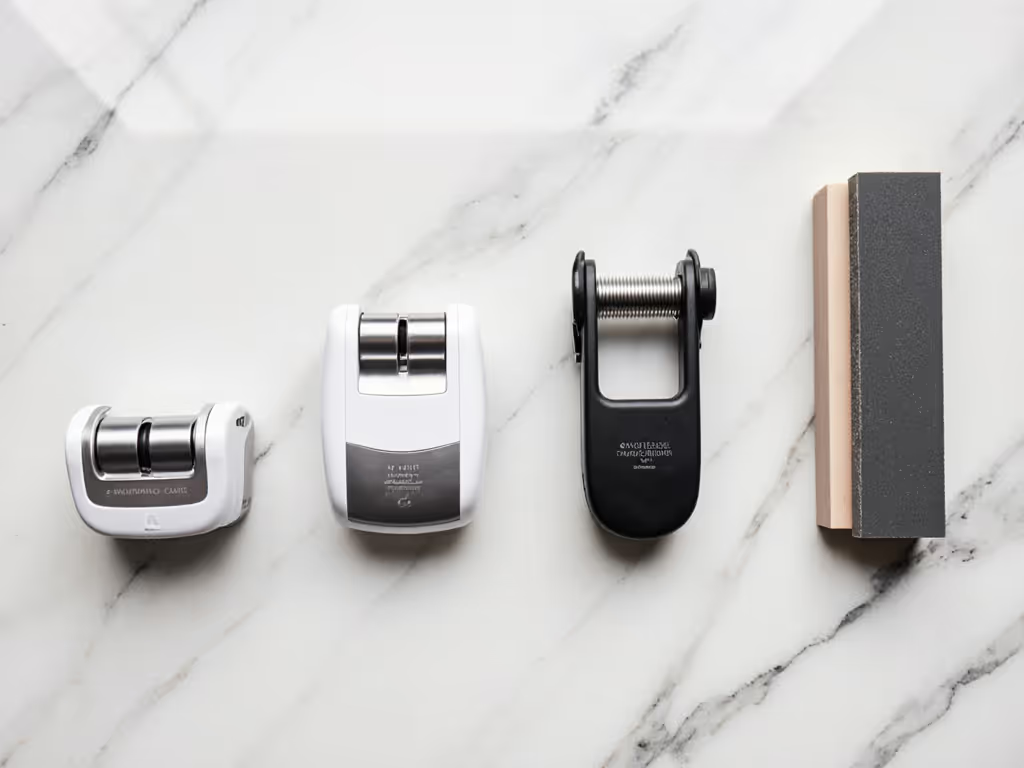
Why Most Compact Sharpeners Fail (And How to Avoid Pitfalls)
Small kitchens expose design flaws fast:
- Slippery bases: Causes dangerous wrist corrections (see KitchenIQ's 6.5° angle variance in testing)
- Fixed angles: Can't match 15° Japanese vs. 22° German knives
- Abrasive confusion: "Coarse/Fine" labels without grit specs waste expensive blade metal
My fix? Treat sharpening like knife skills: break motion into measurable cues. For example:
Feedback-Driven Sharpening Protocol (Under 4 Minutes)
- Set checkpoint: Place knife in guide at 18° (standard for VG-10/AUS-10)
- Coarse stage: 6 strokes per side, listen for burr (dull thud to crisp hiss)
- Fine stage: 4 strokes per side, feel edge for smoothness (no "catch")
- Verify: Cut newspaper: clean snap = valid apex
This mimics the burr-hunting ritual from my Saturday-morning apprenticeship. Precision isn't born from tools, it is forged in deliberate practice with clear feedback loops. The Work Sharp Precision Adjust excels here because its adjustable jig forces consistent movement while letting you feel the steel's response. Less skilled users gain control; advanced users gain speed.
Final Recommendations: Matching System to Your Space Reality
- Tiny kitchens (<10 sq ft counter): Smith's DCS4 ($18.98). Stores flat, zero setup, handles any knife. Sacrifices angle precision but covers emergencies.
- Serious home cooks (10-20 sq ft): Work Sharp Precision Adjust ($69.95). The only sub-100 sq in system with adjustable angles. Replaces three specialized tools.
- Pro-leaning (dedicated space): Work Sharp Rolling Sharpener ($119.95). Faster touch-ups, four preset angles. Ideal for knife sets spanning 15°-25°.
Remember: sharpness isn't permanent. But when you control the angle, steel dictates the outcome. A well-maintained edge (achieved with minimal fuss) translates to safer cuts, faster prep, and that quiet satisfaction of tools that work. Because in the end, your kitchen isn't defined by square footage, but by what you create within it.
Control the angle, steel dictates, your space shouldn't compromise truth.
Related Articles