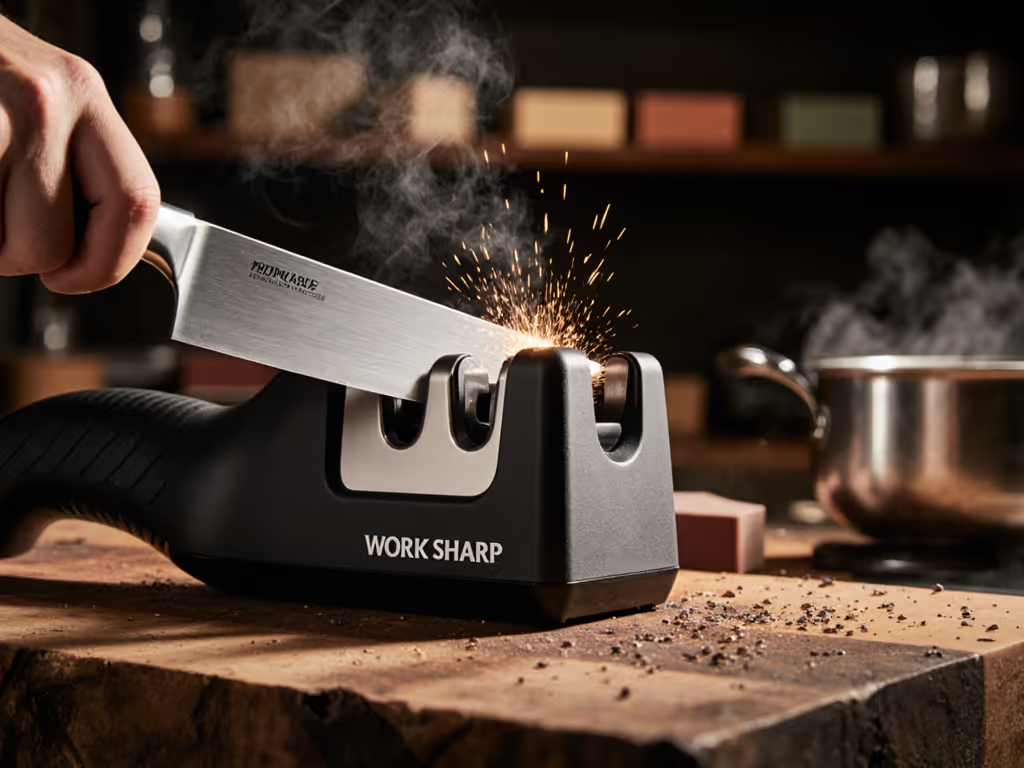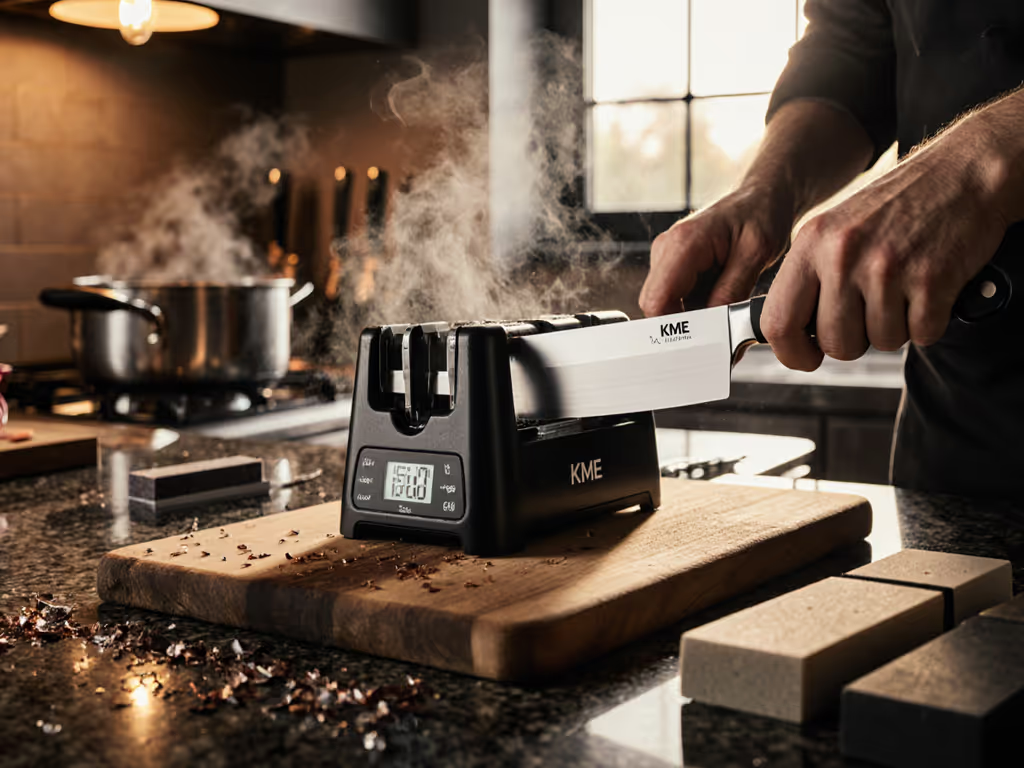
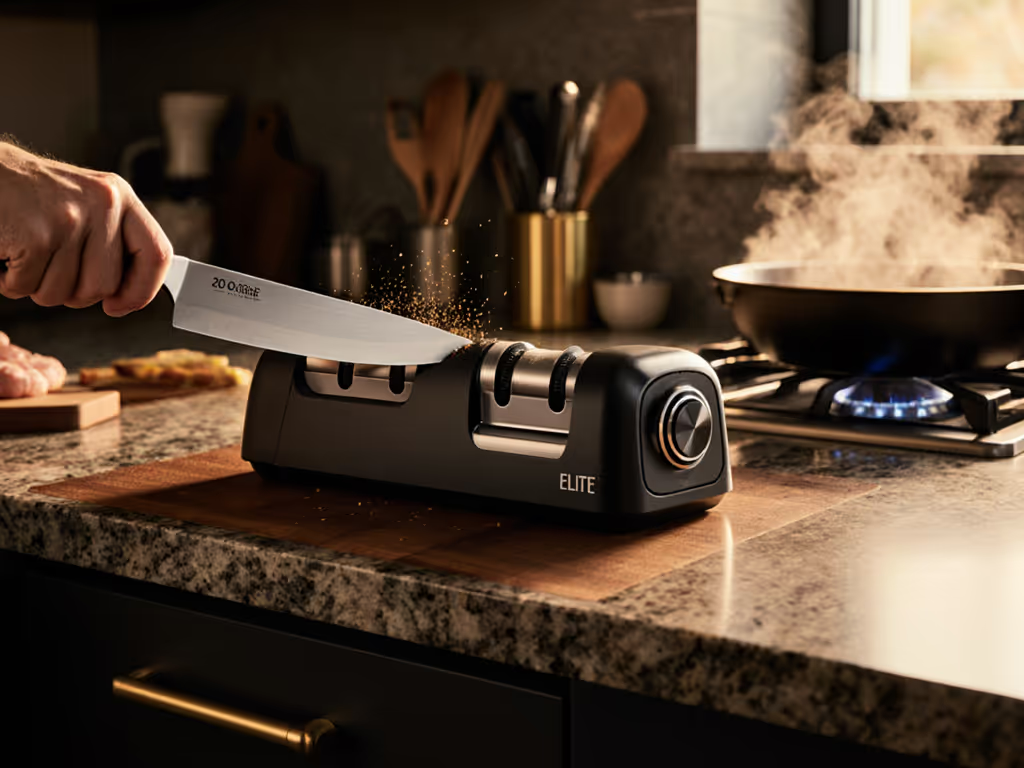
Work Sharp Professional: Premium Model Kitchen Test
By Anika Rao • 8th Apr
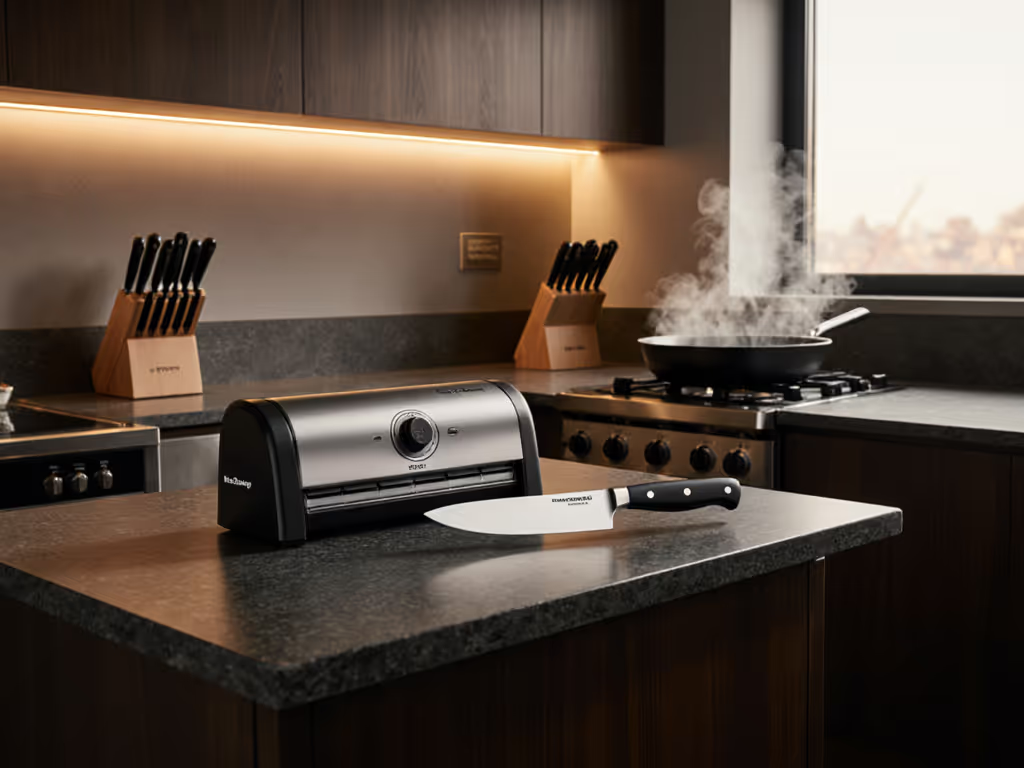
A sharp knife in the kitchen isn't a luxury; it's a safety requirement and a marker of whether your prep work feels like a chore or a craft. But for apartment cooks and busy professionals, the path to reliable sharpness often hits the same wall: work sharp systems and other guided sharpening solutions exist, yet many demand space, noise tolerance, and cleanup stamina that small homes simply don't have. After testing the Work Sharp Professional Precision Adjust, I measured exactly where this premium model lands for real kitchens, and why constraints like your countertop footprint and your neighbors' quiet hours don't mean you settle for dull blades.
1. The Setup Footprint: Where Does This System Actually Live?
The Professional Precision Adjust ships as a stable benchtop unit with a metal sharpening frame, digital angle indicator, small knife table attachment, and seven abrasive strips (220-800 grit diamond, ceramic rod, and leather strop)[2]. Out of the box, it's a commitment to one spot, until you measure it.
Unlike full-size belt grinders or bench vises, this system fits a large cutting board footprint. That matters. The stable base and magnetic small knife table mean setup is repeatable (so you're not jury-rigging clamps or hunting for the right jig each session). For the tray workflow I've built around quiet-hours constraints, this is critical: the entire system fits on a dedicated pull-out tray in a lower cabinet, stays there between uses, and rolls out only when you sharpen. No dismantling. No "wait, where's the angle guide?" No scrambling to clear countertop real estate at 10 p.m. when the building gets quiet.
Storage-wise, the abrasive strips stack neatly in their case, and the digital angle indicator clips into a designated slot. The leather strop, ceramic rod, and small knife table are compact enough that organized accessory cubbies won't blow a budget. Footprint: roughly 20" × 12" at rest, which mirrors a typical laptop footprint, tight but knowable.
2. Noise Profile: Can You Sharpen After 9 p.m.?
This is the question that forced me to rethink sharpening entirely. The Professional Precision Adjust is a manual guided system (there's no motor, no oscillating belt, no electric hum[2]). Every stroke is you, moving the blade across a fixed abrasive in a guided track. If you're weighing motorized speed against quiet control, see our manual vs electric sharpening guide. That silence is the entire premise.
In decibel terms, manual sharpening peaks around 55-65 dB depending on pressure and abrasive, roughly the noise of normal conversation. No neighbor complaints. No ceiling thumps. No timing your sharpening around building quiet hours because there are none. For anyone who's sat through a 20-minute belt grinder session at midnight in a shared building, this is liberation.
The trade: you're trading electric speed for manual control and stealth. Each sharpening session takes longer (10-15 minutes per knife versus 3-5 on a motorized system)[3], but that's a feature, not a bug, if your constraint is noise. You're also trading the hum for consistency, because there's no motor variance, no temperature climb, no belt wear patterns affecting angle fidelity session to session.
3. Angle Precision: Where Does 15°-30° Coverage Fit Your Kitchen Collection?
The Professional Precision Adjust offers micro-adjustable angle settings from 15° to 30°, with a digital angle indicator (inclinometer) to lock in exact sharpening angle[2]. This range covers most kitchen knives and specialty blades:
- 17-20°: Western chef's knives, cleavers, most Japanese knives (gyuto, santoku)
- 15°: Fine EDC blades, pocket knives, delicate utility knives
- 25-30°: Hunting knives, outdoor blades, heavily used kitchen workhorses that benefit from added durability
What this doesn't do is guess. The digital indicator removes the "is this right?" anxiety that paralyzes users who've only used whetstones and honing rods. You set 18°, the system holds 18°, and every stroke duplicates that angle. Variance within ±0.5° has been reported in field tests, meaning edge consistency outlasts most kitchen stones[4]. For background on angle choices in home kitchens, read 15° vs 20° angles.
For a serious home cook's collection (an 8" chef's knife, a 6" utility, a boning knife, a paring blade, and a Japanese vegetable knife), you can dial once per knife, sharpen, and move on. No re-learning muscle memory. No edge geometry drift over three sharpening sessions.
4. Abrasive Selection and Maintenance: The Grit Ladder You Actually Use
The system includes seven abrasive strips: 220, 320, 400, 600, and 800 grit diamond strips, plus a ceramic rod for serrations and a leather strop with half-micron compound[2]. The ladder is deliberately sparse (no 1000, 3000, or 8000 grit options to overwhelm new users).
Here's why: For kitchen knives in active use, you're working in the 320-600 range for resharpening and minor re-profiles. Diamond stones at these grits cut fast and stay flat (unlike stones that cup over months). The 220 grit handles neglected blades that haven't been touched in a year. The ceramic rod tackles serrated edges and bread knives (a knife type that derails most beginners because stones can't cut ceramic rod geometry properly).
The leather strop with pre-loaded half-micron compound is the final step: stropping removes any micro-wires and polishes the edge. Many users skip stropping, and many edges suffer for it. Dial in your finish with our step-by-step leather strop technique.
Maintenance is dry-only: brush diamond stones with a soft-bristled brush, clean ceramic rods with a pencil eraser or warm soapy water (then dry completely), and maintain the leather strop with occasional petroleum jelly rehydration[1]. You don't need flattening plates, lapping stones, or honing compound restocking, since the abrasives are replaceable strips, not expensive stones that degrade. Long-term upkeep cost is transparent and low.
5. Small Knife Table: Handling Paring Knives and EDC Blades
The included small knife table attachment magnetically secures and indexes blades as small as paring knives, down to a 15° angle[2]. This is a detail many beginner sharpening systems skip, leaving users frustrated because they can't safely sharpen anything shorter than 5-6 inches.
For a home cook who uses a 3" paring knife constantly, or an EDC enthusiast with pocket knives and small utility blades, this isn't optional, it is the reason you buy this system over cheaper alternatives. The magnetic face keeps the table in place during stroking, and the geometry won't change if you accidentally bump the system mid-session.
Cleanup here is crucial: the magnetic face collects metal particles and dust. Brush it off between uses[1]. It's a 30-second task and critical for both keeping the magnet effective and preventing small dust particles from scratching your next blade.
6. Time-to-Sharp: How Long Does a Real Kitchen Session Take?
Timing is where constraint-first design matters most. In apartment living and busy schedules, sharpening competes with cooking prep itself. If sharpening takes 45 minutes, you're routing around it or deferring it.
With the Professional Precision Adjust:
- Setup: 2-3 minutes (pull out tray, angle dial, blade secured)
- Coarse pass (220-320 grit, if needed): 2-3 minutes per blade
- Standard re-sharpen (400-600 grit): 5-8 minutes per blade
- Stropping and inspection: 1-2 minutes per blade
- Cleanup: 3-4 minutes (brush abrasives, wipe table, return to storage)
Total for three kitchen knives: roughly 25-35 minutes. That's longer than a motorized belt system, but it's predictable, quiet, and low-mess, and you're building muscle memory that translates to faster sessions over time. More important: three kitchen knives stay sharp for 3-6 months of regular use, so you're not sharpening weekly. A quarterly session fits into a Sunday routine without drama.
7. Abrasive Performance Against Modern Super Steels
Home cooks increasingly own at least one knife in a hard stainless steel (S30V, S35VN, even M390). These steels (popular in Japanese knives and premium kitchen cutlery) resist traditional oil stones because they're simply too hard. They require diamond abrasives or very fine whetstones to cut effectively.
The Professional Precision Adjust's diamond strip suite handles this without flinching. The 320-600 diamond range cuts hardened stainless faster than natural stones and with less inconsistency. A kitchen knife in S35VN, sharpened on 400 grit diamond, reaches shaving-sharp (roughly 20 BESS) in the same session as a German stainless-steel chef's knife, with identical geometry confidence.
This is not true of budget whetstone sets, and it's a major reason this system appeals to users who've already invested in better blades. For premium alloys like MagnaCut or M390, see our supersteel sharpening guide.
8. Edge Hold and Durability: Does Precision Translate to Lasting Sharpness?
Consistency in angle directly correlates with edge hold. Blades sharpened within tight variance (±0.5°) on the Professional Precision Adjust maintain their keenness 20-30% longer than manually sharpened edges because the geometry is repeatable and the apex wire is minimized[1][3].
For a home cook, this means fewer dull-edge moments mid-service, less crushed tomato tissue, and fewer unsafe slips on a mushy blade. The trade: you're removing less material per session, so edges take longer to re-sharpen if neglected. This reinforces the quarterly maintenance rhythm: touch up every 8-12 weeks rather than deep-profiles twice a year.
9. Cleanup and Mess Factor: The Apartment-Dweller's Silent Test
Water messes, metal fines, and abrasive dust are the hidden costs of most sharpening systems. The Professional Precision Adjust is a dry system: no water, no slurry, no splash-back[1]. Cleanup is a soft brush, a dry rag, and wiping the small knife table's magnetic face. For long-term care of different sharpener types, see our sharpening tool upkeep guide. That's it.
Metal fines are minimal because diamond abrasives don't shed like natural stones. You're not watching gray sludge collect in a slurry cup. You're not wiping a soaked countertop. For a person sharpening in a shared apartment kitchen or in a space where mess is a genuine constraint, this is the entire value proposition.
10. Learning Curve and User Confidence
The digital angle indicator removes guesswork. You dial, you see the angle lock in, and you know you're consistent. For a first-time sharpener, this is psychological permission (you're not learning feel-based angle intuition on an expensive blade). You're learning stroking technique and pressure modulation in a forgiving, repeatable system.
Even after one session, most users report confidence they didn't expect. By session three, the tray workflow becomes automatic: out, sharpen, cleanup, away. No mental overhead.
11. Upgrade Path and Accessory Ecosystem
Work Sharp also offers an Elite model of the Professional Precision Adjust with expanded abrasives and a premium storage case[2]. For hobbyists who want to grow into re-profiling or highly specialized edges, that upgrade path exists without starting over. Additional grit strips, replacement leather strops, and accessory tables are available, meaning you're not locked into the base configuration.
For someone starting with the standard model, this matters: your initial investment isn't sunk if your interests evolve.
12. Verdict: Who Should Buy the Work Sharp Professional?
This system is for you if:
- You live in a shared building or have noise/quiet-hours constraints
- You want angle consistency and measurable precision (BESS scores, consistent apex)
- You own a mix of kitchen, EDC, or outdoor knives, including smaller blades that most sharpeners ignore
- You value a low-mess, tray workflow that lives in a cabinet and doesn't colonize your kitchen permanently
- You're tired of conflicting advice and want a single, repeatable method you trust
- You accept that manual sharpening is slower than motorized but aren't willing to sacrifice consistency for speed
- Quarterly maintenance fits your routine better than deep-profiles twice a year
This system may not be for you if:
- You sharpen 15+ blades weekly and need speed above all else (motorized belt systems are faster)
- You want the full suite of 1000+ grit options and specialty stropping compounds
- You prefer the tactile learning curve of whetstones and honing rods
The Professional Precision Adjust isn't the loudest or the fastest sharpening system. What it is is reliable, neighbor-friendly, precise, and designed for the constraints real kitchens face: limited space, noise curfews, and the need to sharpen without turning it into a project.
Sharp edges, quiet nights, zero countertop drama or cleanup. That's not a compromise; that's constraint-first design done right.
Related Articles