Work Sharp Pro Precision Adjust: Fast, Clean Kitchen Sharpness
By Anika Rao • 27th Jul
At a glance
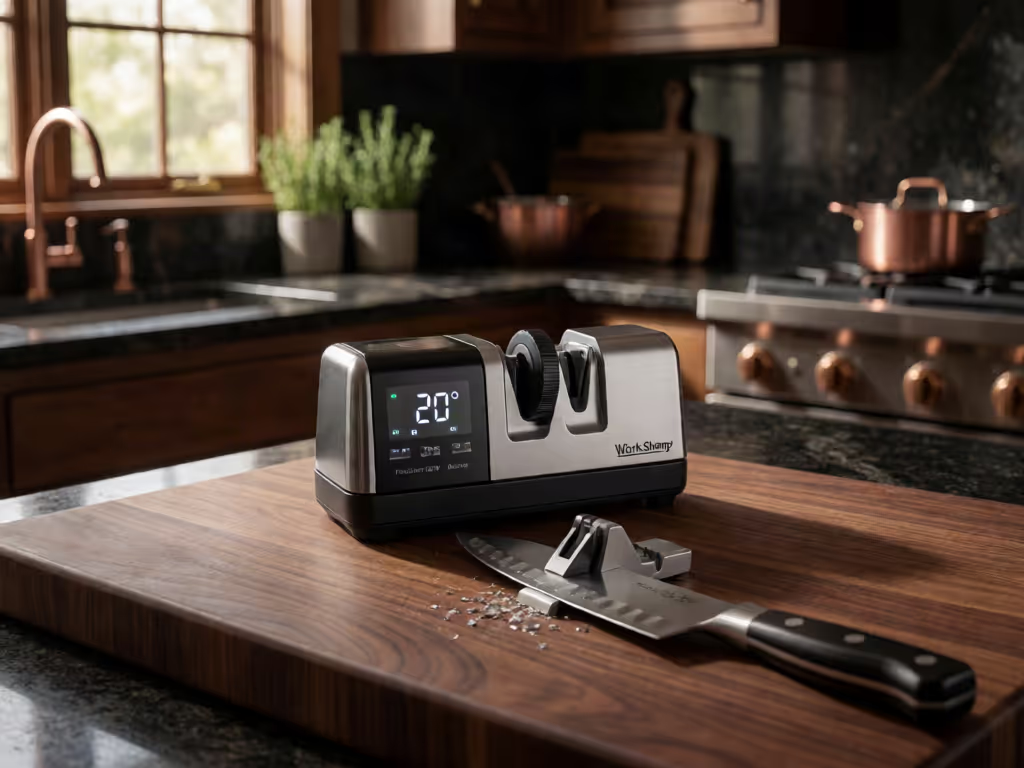
The Work Sharp Professional Precision Adjust is a strong fit for buyers who want a manual benchtop sharpener with continuous 15°–30° angle adjustment, a digital indicator, metal construction, and a broad supplied abrasive progression.
- Best overall: It combines guided angle adjustment, seven abrasives, ceramic finishing, a leather strop, and a serration rod in one system for kitchen, pocket, outdoor, and serrated knives.
- Best for a distinct use case: It suits users maintaining knives around the stated 8-inch example. Longer chef’s knives up to 10 inches are possible but less efficient and may require sectioning and re-clamping.
- What decides it: Buy for guided angle selection and metal benchtop construction; pause if compact storage, measured performance, or efficient long-blade sharpening matters most.
Important: The angle-precision and abrasive-life figures are manufacturer claims, and the supplied grit and strop configuration should be confirmed because listings conflict.
The Work Sharp Pro Precision Adjust (formally the Work Sharp Professional Precision Adjust™ Knife Sharpener) is a manual guided system aimed at people who want adjustable edge-angle control without turning Work Sharp sharpening into a sprawling bench project. Among professional angle-control sharpeners, its appeal is straightforward: continuous 15° to 30° adjustment, a digital angle indicator, metal frame and clamp construction, and a supplied abrasive progression for kitchen, pocket, outdoor, and serrated knives.
That said, the word fast in the title deserves discipline. There are no independent time-to-sharp, BESS, edge-retention, or noise measurements in the collected information, and it does not establish cleanup time. So this review evaluates what the system is built to do, where its design fits a compact kitchen workflow, and where its stated limitations matter, particularly if your knife roll includes long chef's knives.
A sharpening setup earns its place when the edge is controlled and the process does not take over the kitchen.
1. Start with the right expectation: this is a guided benchtop system
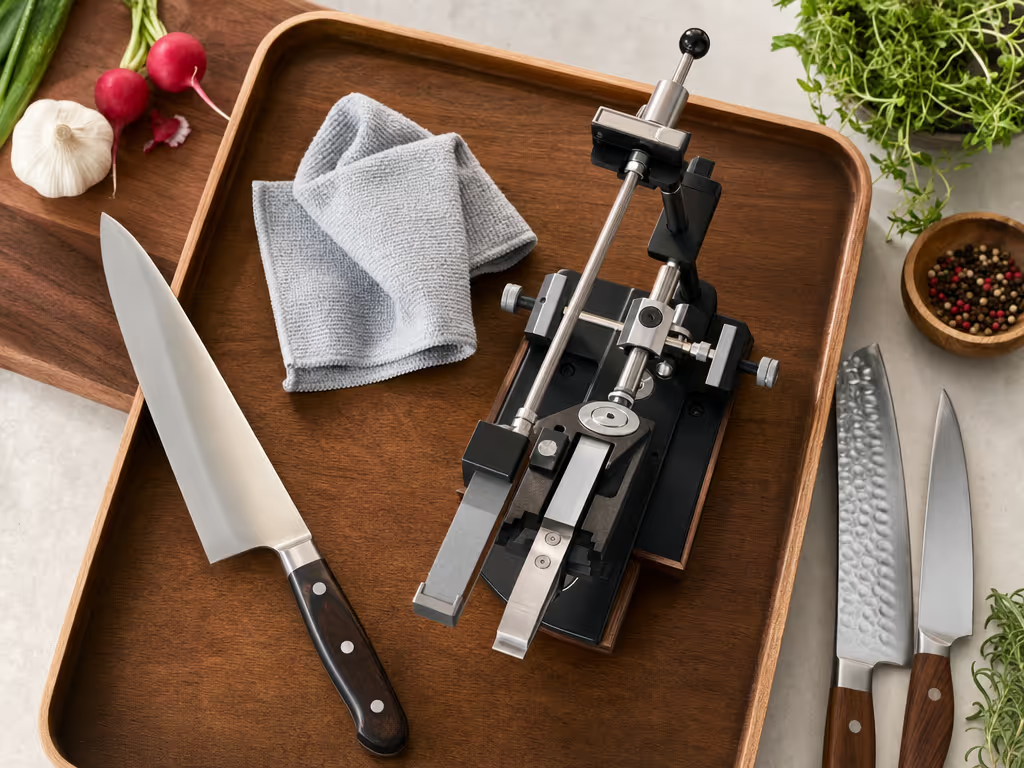
The Professional Precision Adjust is not the original Work Sharp Precision Adjust under a new name. It is a separate, more substantial configuration with a metal sharpening chassis, metal V-block clamp, benchtop base, digital angle indicator, and seven 1-inch-by-6-inch abrasives.
That layout brings adjustable-angle control, a metal clamp, and a broad abrasive set into a benchtop format. The value proposition is guided angle selection, not automation.
For a home cook, that matters when you want to select a familiar angle across several knives rather than guessing each time. For the EDC or outdoor user, it offers a way to choose a specific angle within the product's stated range rather than relying on a fixed preset.
The manufacturer says the digital indicator can consistently set edge angles within 0.25°. That is a manufacturer claim, not an independently validated accuracy result, but it explains why the indicator is central to the Professional model's pitch: the selected angle is visible rather than estimated.
2. The 15° to 30° range is the product's core decision tool
Work Sharp specifies continuous, micro-adjustable angle control from 15° to 30°. That is the feature to focus on before debating grit lists or accessories.
A guided sharpener cannot decide the right sharpening angle for your knife or cutting tasks; it can help you set the angle you choose. That distinction is important. The practical advantage is a visible, selectable setting for routine maintenance, while the decision still belongs to the owner.
Use the adjustment range as a planning tool:
- First, identify the edge you are maintaining. If you already know the knife's existing edge angle, staying near it can avoid unnecessary reshaping.
- Second, separate maintenance from major edge changes. A light touch-up and a full angle change are different jobs, even when performed on the same system.
- Third, record settings. A simple note with knife name, chosen angle, and last service date makes those settings easier to revisit.
- Fourth, avoid chasing a number for its own sake. The system's range gives you choices; it does not make every knife or task better at the lowest available setting.
This is a sensible fit for a mixed collection because the same platform is positioned for kitchen knives, pocket knives, hunting/outdoor knives, and serrated blades. That positioning is from Work Sharp, rather than a controlled result across every steel, heat treatment, or blade geometry. Still, it describes the intended scope accurately.
3. Included abrasives cover a complete manufacturer-supplied progression
The supplied abrasive set is more complete than a single coarse-and-fine arrangement. Work Sharp lists five diamond abrasives in 220, 320, 400, 600, and 800 grit, plus a fine ceramic abrasive and a leather strop. A ceramic rod for serrations is also included.
That sequence is the strongest case for the system as a one-box starting point. For a closer look at how coarse-to-fine grit progression builds a durable edge, see our guide to sharpening grit stages. It gives the user a coarse option, several intermediate diamond stages, a ceramic finishing option, and a strop, rather than requiring an immediate accessory hunt.
Here is the workflow logic without pretending there is one universal grit recipe:
- Match the starting abrasive to the work required. A knife that needs its edge geometry changed is a different project from a knife receiving routine maintenance.
- Move through the supplied progression with purpose. Each stage should refine the work from the prior stage, not simply add strokes because another abrasive is available.
- Treat finishing as part of the process. Fine ceramic and leather strop options are included, giving a route beyond the diamond stages.
- Use the dedicated ceramic rod for serrations. Serrated blades should not be treated as though they have the same edge shape as a plain edge.
There is one configuration point worth checking before purchase: a retailer listing has described the second diamond grit as 300 rather than 320, while Work Sharp lists 320. Since the manufacturer's current product listing is the more useful reference, confirm the actual grit labels on the package you are considering rather than assuming every listing is synchronized.
Similarly, do not assume that the included leather strop arrives loaded with compound. Available descriptions conflict on that detail.
4. The metal chassis and clamp are meaningful, without overclaiming performance
The Professional Precision Adjust uses a fully metal base and clamp construction, including its metal V-block clamp. Compared with lighter or more simplified guided sharpening systems, that construction is a material distinction, and it is particularly relevant for buyers who dislike a setup that feels temporary or toy-like.
But construction is not the same thing as independently measured sharpening quality. The available information does not provide controlled tests of stability, clamp security across knife profiles, scratch prevention, angle repeatability, or results on specific steels. So the right conclusion is narrower: the system is designed around metal structural components and a benchtop format, not that it has proven superior to every alternative.
For a constraint-first buyer, this is where I would pause and plan the station rather than buying by material alone. The unit weighs 7.5 pounds, which is a useful consideration for anyone who expects to move it between storage and the counter.
My own apartment sharpening reset began with one tray and some uncomfortable attention to quiet-hours reality. The lesson was not that every manual system is automatically tidy; it was that setup, swarf control, and teardown deserve the same scrutiny as the edge itself. The Professional Precision Adjust's dry-use guidance is helpful for avoiding an oil-and-water sharpening routine, but the collected information does not establish cleanup time or debris containment.
5. Kitchen knives are a strong intended use, but long blades change the workflow
Work Sharp positions the system for kitchen knives, and the published limitation for longer blades is unusually useful. The manufacturer says an 8-inch blade sharpens easily. A chef's knife up to 10 inches is possible, but less efficient because only about 2.5 inches of abrasive contacts the blade at one time.
That means a longer chef's knife may need to be sharpened in sections and re-clamped as needed. This is not a defect hidden in fine print; it is a planning constraint that should shape your decision.
For the cook who primarily maintains paring knives, utility knives, smaller prep knives, and blades around the stated 8-inch example, the platform is aligned with its intended use. For someone who regularly services long slicers or long chef's knives, the need to work in sections should be treated as a real setup-time cost.
The system also includes a small knife table attachment. Work Sharp says it is intended for small pen knives and can sharpen them down to 15°. That makes the product's range more useful for owners who switch between kitchen and compact folding knives, while staying within the same stated angle range.
6. Dry use is an operational advantage, but "clean" still needs a personal test
For the Professional Precision Adjust, Work Sharp provides dry-use guidance; it cautions that oil or water can contribute to oxidation or rust, and says to dry promptly if water is introduced.
For people avoiding soaking stones or wet work on a kitchen counter, dry use is relevant. It means the stated operating method does not require water or oil. It does not prove a mess-free experience. The collected information does not establish cleanup time or whether the system protects a countertop.
A practical compact-space protocol is simple:
- Assign a dedicated tray or washable work surface.
- Keep the knife, system, and wipe-down materials together before starting.
- Return the system to storage only after clearing the work area.
- Keep moisture out of the sharpening process unless you are prepared to dry the tool promptly, consistent with the manufacturer's guidance.
This is mundane accounting, but it is how sharpening remains repeatable on a weeknight. A consistent cleaning and storage routine also helps maximize sharpening tool longevity, especially when the system is used regularly. Sharp edges, quiet nights, zero countertop drama or cleanup is the target; whether this particular system reaches it in your home depends on your tray, storage, and cleanup habits, not an unverified promise.
7. Consumable planning is clearer than it first appears
The system ships with its seven abrasives, so a new owner has a defined starting kit. Work Sharp estimates that an abrasive set can handle approximately 75 to 100 sharpenings in its own testing, while noting that blade size, steel type, knife condition, and pressure affect real-world life.
That estimate should be used for budgeting, not as a guaranteed replacement interval. A neglected large knife and a lightly maintained smaller knife do not ask the same amount of an abrasive.
The no-fuss approach is to avoid buying extras until you can name the gap in your present workflow. If the supplied sequence handles your knives, more abrasives are not automatically an upgrade. Build the skill of consistent maintenance first; then add only what solves a demonstrated problem.
At collection on August 11, 2026, Work Sharp listed the system at $299.95, while one retailer listed it at $249.95 and in stock. Those were snapshots rather than current purchase terms: verify the current total, stock, accessories, and warranty before buying. At collection, Work Sharp listed a three-year warranty; confirm the current terms at purchase.
8. Who should choose it, and who should pause
The Professional Precision Adjust makes the strongest case for buyers who prioritize the following:
- A guided, manual benchtop system rather than freehand sharpening.
- Continuous 15° to 30° angle selection.
- A digital angle readout as part of the setup.
- Metal frame and clamp construction.
- A manufacturer-supplied abrasive progression that includes diamonds, ceramic, a strop, and a serration rod.
- One platform positioned for kitchen, pocket, hunting/outdoor, and serrated knives.
Pause before purchasing if your priority is something the published details do not establish:
- Proven speed: no independent sharpening-time data is available.
- Measured sharpness or edge retention: no standardized sharpness or retention results are available.
- Verified quietness or cleanup burden: the collected information includes no noise measurements and does not establish cleanup time or debris containment.
- Efficient handling of long kitchen blades: Work Sharp specifically notes that 10-inch chef's knives are possible but less efficient and may need sectioning.
Those are not reasons to dismiss the system. They are reasons to buy it for the documented features, rather than for performance conclusions that have not been substantiated.
9. FAQ
Is the Work Sharp Precision Adjust good?
The Professional Precision Adjust has a well-defined feature set: a 15° to 30° guided angle system, digital indicator, metal frame and clamp, seven supplied abrasives, and manufacturer positioning for several knife categories. Whether it is good for you depends chiefly on whether you value guided angle control and can accommodate a 7.5-pound benchtop system. Independent performance testing was not available for a broader verdict.
Which knife sharpener has an adjustable angle guide?
The Work Sharp Professional Precision Adjust has continuous, micro-adjustable angle control from 15° to 30° and a digital angle indicator. Work Sharp claims the indicator can consistently set the angle within 0.25°.
How should I use it with kitchen knives?
The available guidance supports dry use. For longer blades, Work Sharp advises working in sections and re-clamping as needed; it says 8-inch blades sharpen easily, while chef's knives up to 10 inches are possible but less efficient. For detailed operating steps, follow the current manufacturer instructions supplied with the tool.
What issues should kitchen users plan around?
The documented considerations are the limited contact area on longer blades and Work Sharp's dry-use guidance for this system. No evidence here establishes the prevalence of other problems. Plan for a protected work surface and a cleanup routine rather than assuming any sharpening setup is self-contained.
10. Summary and final verdict
The Work Sharp Professional Precision Adjust is a serious guided sharpening system built around continuous angle adjustment, a 15° to 30° range, a digital angle indicator, metal structural components, and a broad included abrasive package. If you are comparing it with other kitchen-focused models, our Work Sharp culinary sharpener comparison provides a broader look at the lineup. For the cook or knife owner who wants a controlled alternative to freehand sharpening, those are meaningful, specific strengths.
Its most practical limitation is equally specific: long kitchen knives require more deliberate handling because the abrasive contacts only a limited length of blade at once. And its headline promises should be read cautiously, there is no independent evidence here to call it the fastest, cleanest, quietest, or sharpest option in its class.
Final verdict: choose the Professional Precision Adjust if guided angle selection, a metal benchtop platform, and a supplied coarse-to-strop progression fit your sharpening workflow. Treat storage fit, cleanup practice, and long-blade efficiency as purchase checks, not afterthoughts. Constraints are where the smarter sharpening plan begins.
Related Articles