High-Volume Kitchen Sharpening: Speed vs. Durability Test
By Sora Tanaka • 10th May
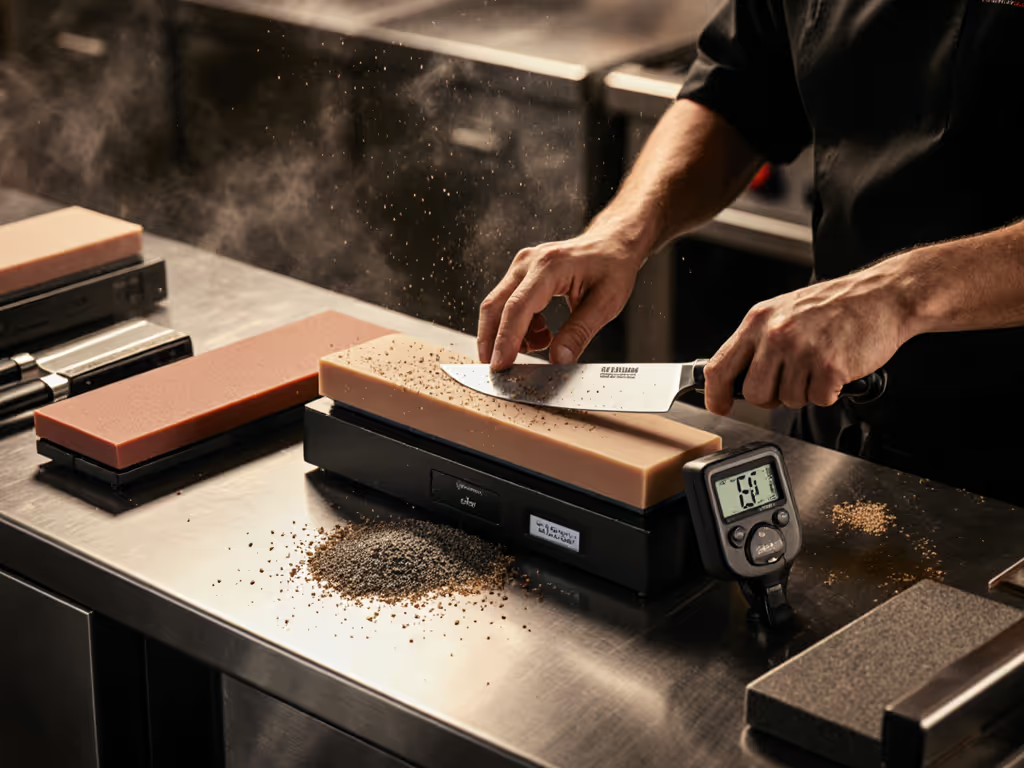
When you sharpen dozens of knives weekly (whether you're running a restaurant kitchen, food truck, or catering operation), the question becomes stark: do you prioritize high-volume kitchen sharpening speed, or do you protect blade longevity? The answer isn't either-or. It's about matching your method to your steel, use-case, and the feedback your edges give you.
In this guide, we'll walk through the real trade-offs between speed-focused systems and durability-first approaches. You'll leave with a clear framework for testing which strategy works for your workflow, and how to blend both philosophies so you sharpen fast without wearing through expensive blades.
FAQ: Speed vs. Durability in High-Volume Sharpening
What's the Core Trade-Off Between Speed and Durability?
Speed-focused systems (coarse belts, aggressive wheels, or fast-cycling abrasives) remove material quickly. You get a sharp edge in minutes. But each pass costs steel. Durability-first methods (fine stones, light pressure, multi-stage progressions) preserve blade geometry and extend re-profiling intervals. The trade-off: they demand more time and skill.
The honest truth: If you're resharpening the same knife three times per week, a speed method that removes 0.015" per session will thin your blade noticeably within a season. A deliberate method that removes 0.003" per session keeps your geometry intact for years.
Control the angle, control the outcome. Steel tells the truth. A restaurant kitchen on a tight morning rush needs speed. A food truck that travels with a limited toolkit needs durability. Most professionals juggle both: fast touch-ups mid-service, careful re-profiling during downtime.
How Do High-Speed Systems (Belts, Wheels, Electrics) Affect Edge Lifespan?
Electric and motorized systems compress time, but they compress material loss too. Here's what happens:
Material removal rates (approximate, steel-dependent):
- Coarse belt (80-120 grit): 0.010-0.025" per minute of contact
- Fine belt (220-320 grit): 0.005-0.012" per minute
- Bench grinder wheel: 0.015-0.040" per minute (highly variable)
- Work sharp sharpening systems: 0.004-0.008" per minute (controlled)
- Manual stones (1k-6k): 0.002-0.006" per minute (high skill dependency)
A chef's knife blade is typically 2-3 mm thick at the spine. If you're removing 0.025" per weekly sharpening with a coarse belt, you've lost a quarter of your blade's cross-section in a year. With careful stone work, you lose 10-15% over the same period.
Checkpoint: Measure your blade thickness before and after each method for one month. This single number, tracked, will show you what your system actually costs in steel.
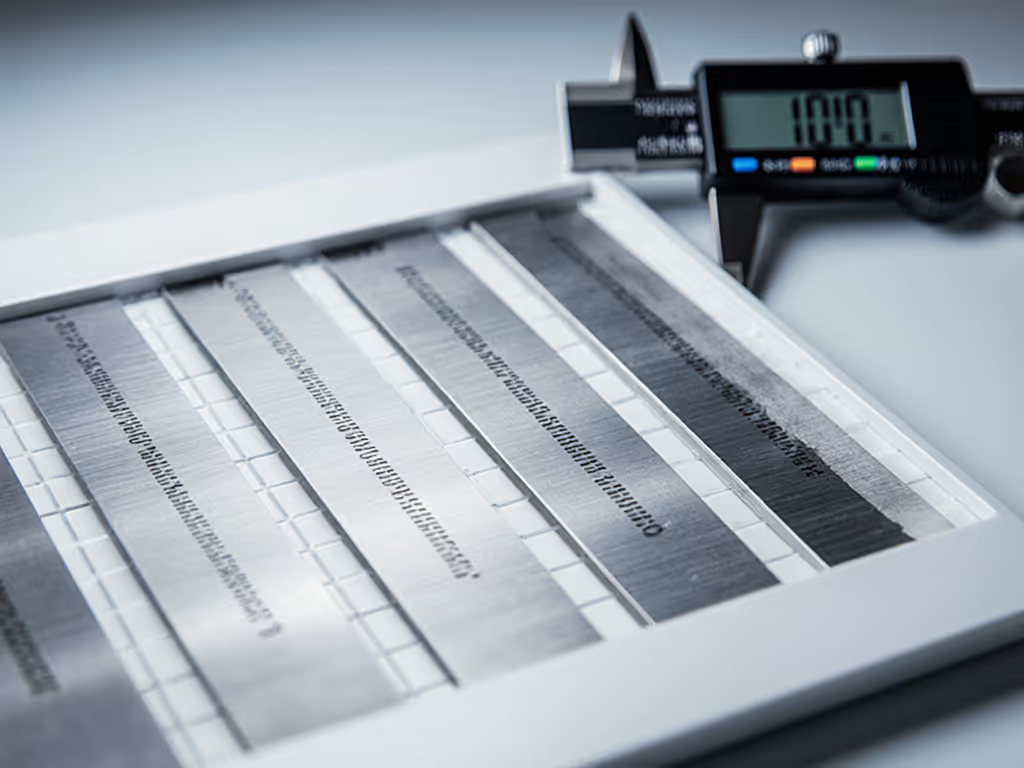
Does Restaurant Kitchen Sharpening Speed Demand Sacrifice Edge Geometry?
No, but only if you set it up intentionally. The mistake most high-volume operations make is using one system for all sharpening. Instead, tier your approach:
Tier 1: Mid-Service Touch-Up (2-3 minutes per knife)
- Goal: Restore bite, not re-geometry
- Method: Fine honing steel, stropping, or a guided 5k stone pass
- Material loss: minimal (under 0.001")
- Edge result: Apex restoration, consistent angle, lasts 4-8 hours of hard use
Tier 2: Daily Reset (5-10 minutes per knife)
- Goal: Flatten micro-chips, re-establish apex
- Method: 1k-2k progression stone or fine belt on light pressure
- Material loss: 0.003-0.005"
- Edge result: Full refresh, lasts 1-3 days
Tier 3: Weekly Re-Profile (15-25 minutes per knife)
- Goal: True geometry, address wear, prepare for hardness changes
- Method: Multi-stage progression (200 grit → 1k → 4k) or belt system with controlled speed For step-by-step guidance on building an efficient sequence, read our grit progression guide.
- Material loss: 0.008-0.015"
- Edge result: Renewed bevel, lasts 5-7 days before Tier 2 needed
Food truck sharpening efficiency relies on this stacking. You stay sharp and you preserve steel. A truck operator with limited bench space runs only Tier 1 and 2, enough for 12-hour service days and minimal blade inventory.
What's the Real Cost of "Fast" in Commercial Sharpener Durability Terms?
Let's quantify what speed truly costs. For a long-term total cost view across methods, see our 5-year cost breakdown. Assume a 200-knife restaurant fleet, 8" chef's knives at $80 each (average quality):
Speed-focused scenario (coarse belt, weekly full sharpening):
- Material removed per year: ~0.25" (assuming 50 sharpening cycles)
- Blades at 2.5 mm start thickness: worn to ~1.8 mm in 18 months
- Replacement cost:
200 knives × $80 = $16,000 every 18 months = **$10,700/year** - Time investment: 200 knives × 3 min = ~10 hours/week
Durability-focused scenario (tiered stones + belt, mixed pace):
- Material removed per year: ~0.08" average (lighter touches, Tier 1/2 emphasis)
- Blades at 2.5 mm start thickness: worn to ~2.0 mm in 5-6 years
- Replacement cost:
200 knives × $80 = $16,000 every 5.5 years = **$2,900/year** - Time investment: 200 knives × 7 min (Tier 2 average) = ~23 hours/week (but distributed, not rushed)
Volume sharpening cost analysis: The durability approach costs ~8 more labor hours per week but saves $7,800 annually in blade replacement. For a busy kitchen, that's one part-time sharpener's salary offset, plus you never face a crisis mid-service from unexpected dull inventory.
Control the angle, control the outcome. Steel tells the truth. A rushed, high-speed routine shows up as thin blades and edge failures under load.
How Do I Test Which Approach Fits My Kitchen?
Don't guess. Run a parallel test over four weeks:
Week 1: Benchmark
- Measure 10 knives (spine thickness, front-to-back at heel and mid-blade)
- Test sharpness (tomato test, paper cut, or BESS score if available)
- Note service hours and how many knives fail before re-sharpening
Week 2-3: Speed Method
- Sharpen all 10 knives using your fastest system (coarse belt, wheel, etc.)
- Track time per knife and material removed (measure again mid-week)
- Log edge lifespan (when knives dull noticeably in service)
- Note any geometry shifts (tap test on a flat surface; does the knife rock?)
Week 4: Durability Method
- Reset the blades (re-profile on fine stones if needed)
- Use tiered, lighter touch-ups and deliberate progression
- Track time, material removed, and edge lifespan again
- Compare results
Feedback cues to log:
- Does the blade feel consistent under load, or does edge pressure vary along the length?
- How many service hours before you want to re-sharpen (vs. when you have to)?
- Visual: compare the spine profile under light. Has it narrowed visibly?
Can I Combine Speed and Durability in One Workflow?
Yes. This is the professional standard. The framework: lighten the finishing passes.
Here's the checkpoint-driven blend:
- Coarse stage (if needed, 2-3 min): Use a 120-200 grit belt or wheel only if the edge is severely chipped or geometry is way off. Full pressure, fast removal.
- Mid stage (4-5 min): Move to 400-1000 grit. Reduce pressure by 30-40%. This begins the feedback loop, listen for the sound change as the burr forms and levels.
- Finishing stage (3-4 min): 2k-4k stone or fine belt on light pressure. This is where durability is preserved. You're polishing the apex, not excavating steel. Material removal drops by 50-70% relative to coarse stage.
- Stropping/honing (2 min): Final light pass or strop to align the edge without removing steel.
Why this works: You achieve speed by being aggressive early (when the work is rough), then you protect the blade by being patient and light where precision matters. Material loss is frontloaded and controlled. Geometry is maintained by the finishing passes, which demand restraint and feedback.
I learned this rhythm years ago, trading Saturday mornings under a sharpener's watchful eye. For months he had me chase a clean burr on cheap stainless using only a 1k stone, no coarse stages, no cheats. When I finally heard the whisper change in the sound, I understood: feedback is the teacher. The stone is honest. Once I could feel that checkpoint, adding faster stages became safe. Speed without that foundation just damages blades.
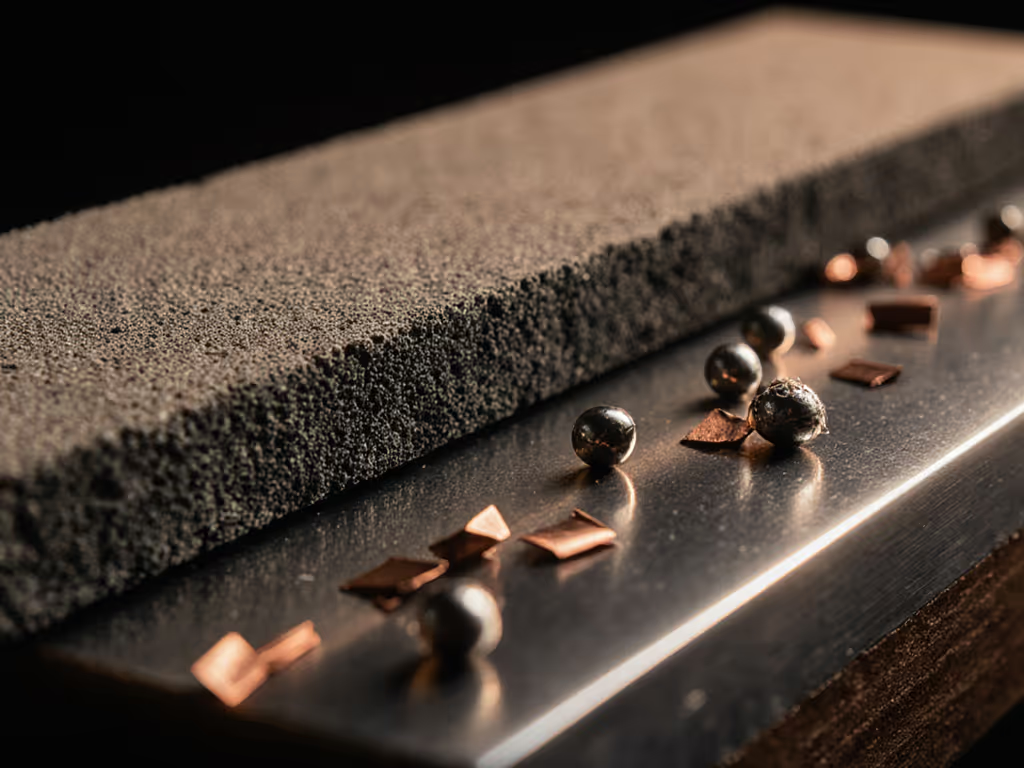
What Steel Types Change the Speed-vs.-Durability Equation?
Low-to-medium hardness stainless (like 420 or AUS-8) responds to fast methods well because it's forgiving. For material-specific advice, see our knife steel types explainer. Soft steel moves fast and tolerates aggressive angles.
High-carbon and super steels (S35VN, M390, 3V) tell a different story:
Super steels demand slower finishing:
- They resist coarse abrasives, so you need sustained pressure early (slower tempo)
- They hold edges longer when precision is maintained (reward for deliberate work)
- They work sharp systems often outpace coarse electrics because control matters more than speed
Commercial sharpener durability considerations:
- If your fleet is mixed steel types, tiered sharpening is essential (not optional)
- A 10:1 speed advantage on VG-10 becomes a 3:1 advantage on M390
- Resisting the urge to catch up on hard steel is where durability is won or lost
Where Do Food Truck and Portable Setups Fit?
Portable sharpening is inherently durability-biased because:
- You can't carry coarse belts and wheels; stones and honing steels are the go-to
- Space and power limits mean hand-driven or low-RPM systems
- Downtime in the field is expensive, so blade lifespan per cycle matters more than cycle speed
Food truck sharpening efficiency leans hard on Tier 1 and 2 methods:
- Honing steel for mid-shift resets (1 minute, zero material loss)
- A 2k-4k stone for morning and evening (5-8 minutes, material loss near-invisible)
- A backup 1k stone for damage repair only
- Avoid re-profiling in the field; plan for weekly bench work off-site
This workflow lets a two-person truck operate 12+ hours on a 12-knife fleet without crisis sharpening and with minimal blade retirement over two years. For setup options tailored to mobile kitchens, check our food truck sharpening guide.
How to Choose Your System: A Checkpoint Framework
Ask yourself these questions:
Q1: How many knives do you sharpen per week?
- Fewer than 10 → Durability bias (fine stones, manual systems)
- 10-50 → Balanced tiered approach
- 50+ → Speed bias allowed, if you tier (Tier 1 for daily, Tier 3 for weekly)
Q2: What's your blade retirement target?
- Minimize replacement (3-5 year lifespan) → Durability focus
- Accept regular replacement (1-2 years) → Speed focus acceptable
Q3: What's your space and noise constraint?
- Apartment or shared kitchen → Stones and hand tools; quiet, compact
- Dedicated prep area → Motorized systems allowed; tier them with stones for finishing
Q4: Can you measure feedback?
- Yes (you have calipers, or can test edge lifespan) → Combine methods confidently
- No → Stay durability-focused; let time and feel be your guide
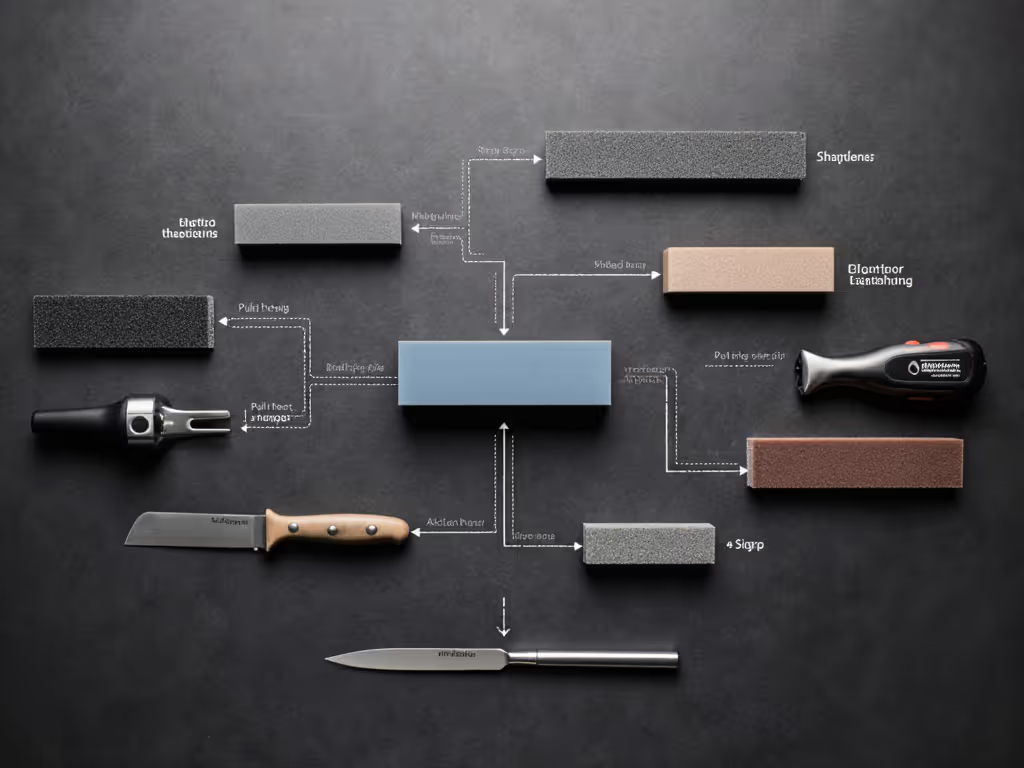
Moving Forward: Further Exploration
The speed-vs.-durability question doesn't resolve with a single answer. It resolves with deliberate practice and clear feedback loops. Your kitchen, your steel, and your workflow are unique variables. What works for a Michelin-starred kitchen might fail for a food truck or a home cook's limited time.
Here are ways to deepen your approach:
1. Run your own four-week test. Don't adopt a new system based on reputation. Measure, compare, decide. Checkpoint weekly.
2. Match your method to your steel. Know the hardness and edge-retention profile of each knife type in your collection. Soft stainless tolerates speed; high-carbon and super steels reward precision.
3. Invest in one tier at a time. Start with a durable, simple method (a 1k and 4k stone pair, or a single fine belt). Master the feedback cues. Then add speed tools if your volume justifies it.
4. Log your data. Blade thickness, service hours, sharpening time, these numbers are your feedback loop. Consistency over speed is how masters sharpen.
5. Seek feedback from your edges. Listen to the burr formation, feel the pressure needed, observe how long edges last. Control the angle, control the outcome. Steel tells the truth.
Whether you're feeding a packed dining room, rolling out of a food truck at dawn, or honing your home kitchen's fleet, the principle holds: speed without durability is waste. Durability without speed is burnout. The goal is balance, measured, and repeatable. That's where real mastery lives, not in the fastest tool, but in your hands' ability to feel the edge and lighten the finishing passes when it matters most.
Related Articles