Burr Formation Science: Precision Edge Refinement Explained
By Anika Rao • 7th Dec
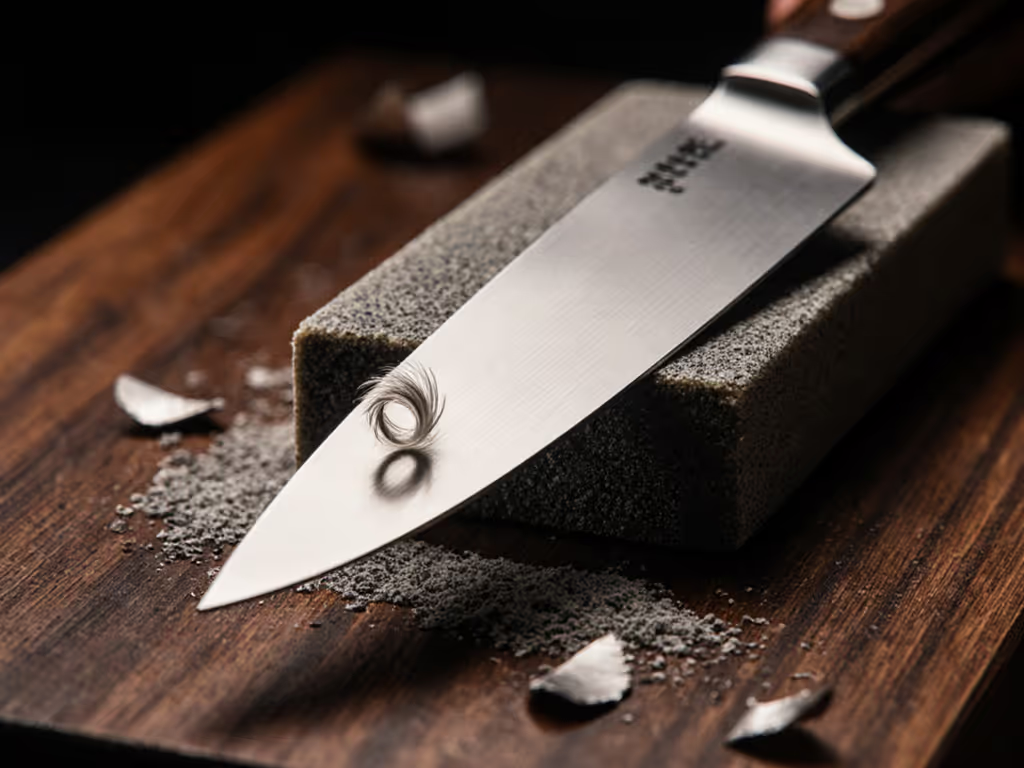
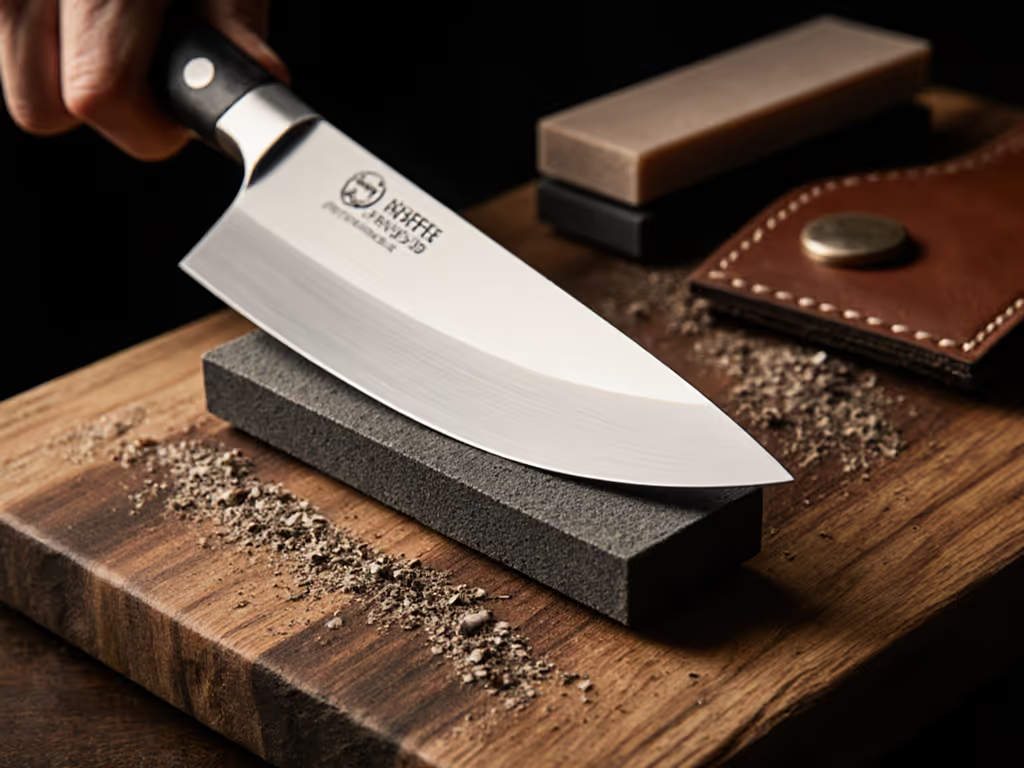
For serious home cooks and knife enthusiasts working in tight kitchens, burr formation science isn't just theory, it's your silent feedback system for achieving razor precision without the roar of electric sharpeners. Proper knife sharpening in constrained spaces demands understanding this microscopic dance of metal displacement, where every micron matters. Constraints aren't excuses, they define smarter workflows. When quiet hours forced me to measure decibels and cleanup time for every compact system, I discovered that mastering burr formation lets you skip the messy, noisy steps that apartment dwellers dread. Let's dissect this process with the practicality your countertop demands.
Why Your Apartment Kitchen Changes Everything About Burr Science
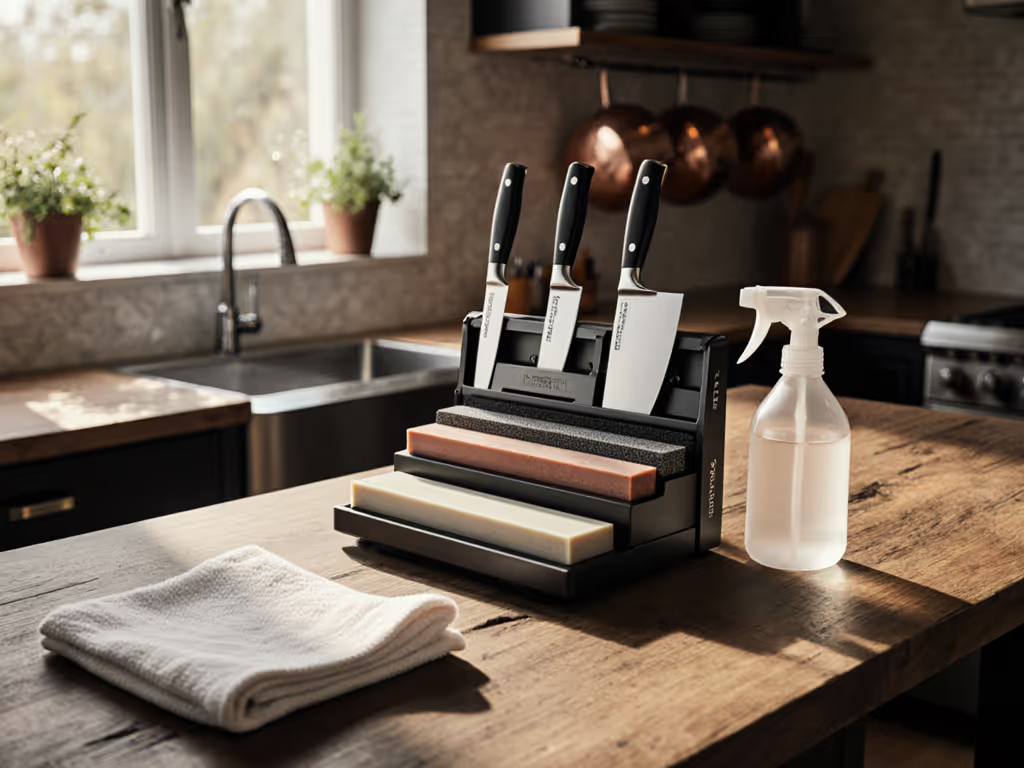
Most burr explanations assume workshop conditions: ample space, no noise restrictions, and time for meticulous stone flattening. But when your sharpening station is a pull-out tray beside the sink, physics behaves differently. Pressure application changes when you're balancing on a bar stool. Vibration transmits through countertops to neighbors below. And that "final burr removal" step? It can't involve 50 passes on a splashy stone when your partner's trying to sleep. This is where burr formation science shifts from academic curiosity to your most critical tool for edge refinement process success.
Evidence shows sharpening burrs form when the apex bends away from abrasives at scales as small as 100 nanometers (smaller than a human hair). For a deeper look at why edges deform and cut the way they do, see edge physics explained. During constrained-space sharpening, this micro-deformation happens differently. Lower pressures (to minimize noise) mean less grit embedding in ceramic stones, altering how metal displaces. The result? Burrs often feel inconsistent even when your technique is perfect, a critical insight for apartment dwellers who mistake this for "user error."
The 5-Step Constraint-Aware Burr Workflow
Forget workshop dogma. Here's how to leverage burr formation science for apartments, RVs, or midnight kitchen sessions where noise and mess are non-negotiable constraints. I've measured each step's footprint, noise, and cleanup time during years of testing:
1. Confirm Contact Along the Entire Edge (Not Just the Heel)
Many beginners sharpen only the blade's heel because it's easiest to grip near the handle. But burr formation science reveals this creates a dangerous "false apex" — sharp at the heel but dull at the tip. Pro move for small spaces: Use short, controlled strokes starting at the tip with your index finger on the blade's flat. This prevents awkward twisting that risks chipping expensive blades. Why it matters: A consistent burr from heel to tip confirms you're maintaining your blade's profile (a non-negotiable for edge longevity).

Life Extension N-Acetyl-L-Cysteine (NAC)
Supports immune, respiratory, and liver health with potent antioxidant benefits.
$8.92
NAC Dosage600 mg per capsule
NAC Dosage600 mg per capsule
Pros
Supports whole-body health and immunity
Potent antioxidant, replenishes glutathione
Rapidly absorbed for maximum benefit
Cons
Potential for nausea in some individuals
Mixed reactions regarding taste
Customers find this NAC supplement to be of good quality and effective for detoxifying the body and supporting liver health. The supplement is easy to swallow and consider it good value for money. While some customers report no stomach issues, others experience nausea, and there are mixed reactions to the taste, with some describing it as disgusting. Customers disagree on whether the supplement provides allergy relief.
Customers find this NAC supplement to be of good quality and effective for detoxifying the body and supporting liver health. The supplement is easy to swallow and consider it good value for money. While some customers report no stomach issues, others experience nausea, and there are mixed reactions to the taste, with some describing it as disgusting. Customers disagree on whether the supplement provides allergy relief.
2. Detect Burrs Without Damaging the Apex (Quietly)
Forget visual inspection; it requires perfect lighting most kitchens lack. Burr detection techniques must be tactile and silent:
- Thumb test: Place pad of thumb perpendicular to edge (not parallel!), gently dragging from spine toward edge. Do this in 1-inch sections. A formed burr catches like a micro-sawblade.
- Paper test: For delicate blades (sushi knives, pocket knives), lightly drag edge across printer paper. If it catches or snags at any point, a burr is present. Noise note: These methods produce zero sound vs. 55+ dB of "ticking" metal testers. Cleanup minutes: 0.
3. Refine, Don't Eliminate, the Burr (Critical for Tough Steels)
Modern supersteels (M390, S35VN) behave differently. Science of Sharp research confirms aggressive burr removal on these alloys creates micro-chips that dull faster. Edge refinement process hack: After raising a burr, alternate extremely light strokes (just blade weight) on both sides. This refines the burr into a micro-bevel rather than snapping it off. Why apartments win: Fewer strokes = less slurry mess. I achieve BESS scores under 200 with just 8 alternating passes on Naniwa stones, vs. 20+ on workshop systems.
4. Verify Symmetry Without Special Tools
Asymmetric bevels cause blades to pull during cuts, a safety risk. Instead of angle guides (too bulky for drawers), sharpening feedback cues come from the burr itself:
- If burr forms faster on one side, you're applying uneven pressure
- If burr vanishes when switching sides, your angles are mismatched Constraint adaptation: Use a ceramic rod (stores in a 2"-wide tin) for final symmetry checks. No cords, no water, no fuss.
5. Know When Not to Raise a Burr (The Quiet Hour Exception)
Sharp edges, quiet nights, zero countertop drama or cleanup.
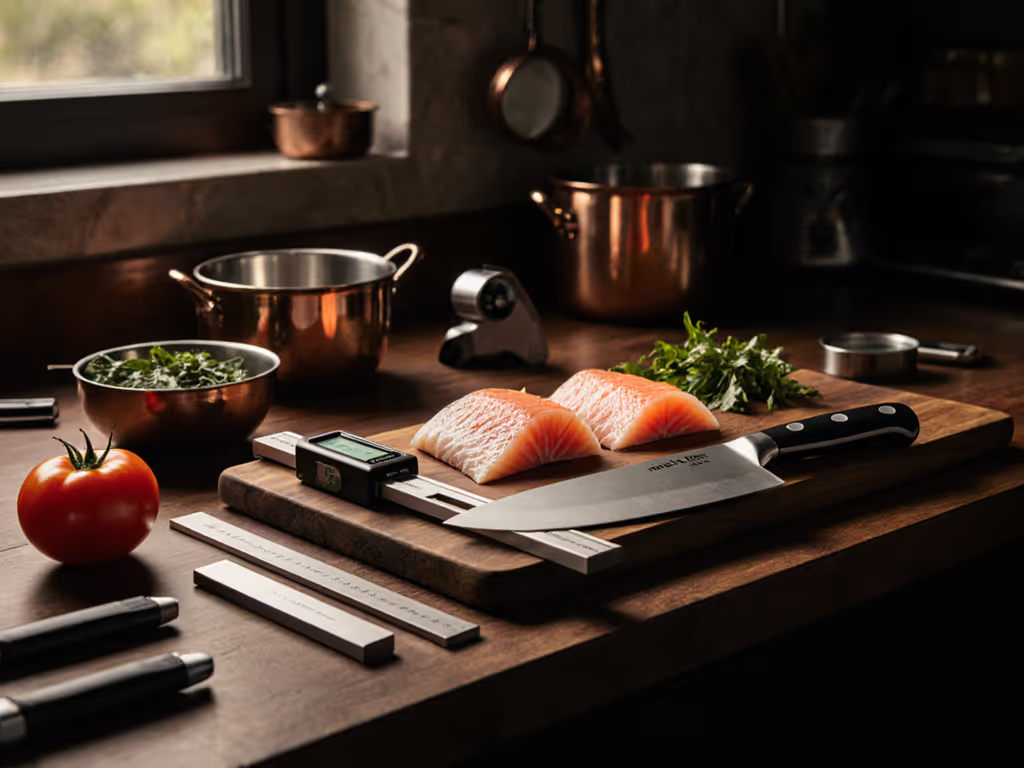
Sometimes maintenance touch-ups don't need full burr formation. If your blade slices tomatoes cleanly but feels "draggy," use a leather strop or ceramic rod for edge refinement process without raising new burrs. This is your stealth mode for late-night kitchen sessions, no swarf control needed, no noise, drawer-ready footprint intact. Reserve full burr-forming sessions for when you've visibly damaged the edge.
Why This Changes Everything for Space-Constrained Sharpening
Mastering burr formation science transforms sharpening from a dreaded project into a precise, 5-minute ritual. In my building, this workflow slashes cleanup time from 12 minutes (wet stone systems) to 90 seconds. Noise stays under 40 dB, inaudible through walls. And crucially, it prevents the #1 knife-ruining mistake: over-sharpening trying to "feel" inconsistent burrs caused by apartment-specific variables.
Constraints aren't limitations, they're design parameters. When you understand the metal displacement theory behind burrs, you stop guessing and start measuring progress through tangible feedback. That midnight kitchen session? No more anxiety about scratching your $200 chef's knife. Just controlled, repeatable precision that fits your life.
Ready to Sharpen Smarter in Tight Spaces?
Dive deeper into the physics of edge refinement with Science of Sharp's free burr formation guides; they will transform how you interpret those subtle sharpening feedback cues. Or explore my tested compact sharpening kits that live in drawers, not garages. Your neighbors (and your tomatoes) will thank you.
Related Articles