Knife Sharpening Methods: Cross-Cultural Comparison
By Sora Tanaka • 29th Nov
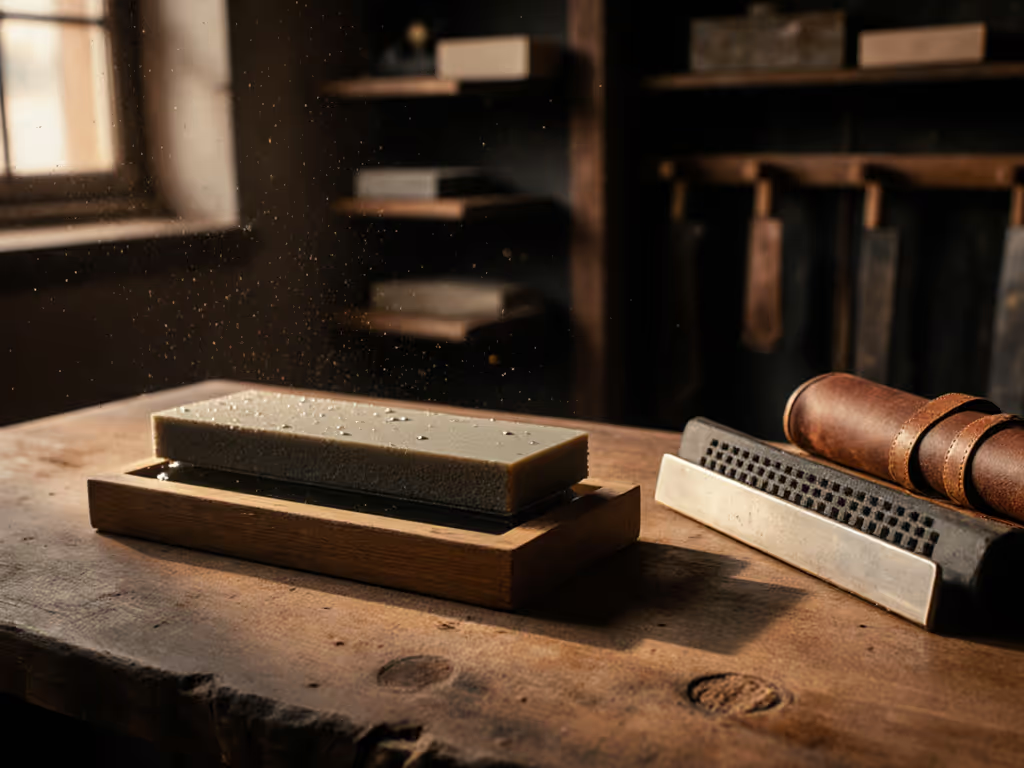
Mastering effective knife sharpening requires understanding not just the best sharpening tools but the underlying principles that govern edge formation across different knife traditions. This cross-cultural comparison examines the nuanced approaches to maintaining kitchen blades, providing practical insights for those seeking precision without mysticism. Control the angle, steel dictates, this immutable law applies equally to German cleavers and Japanese petty knives, regardless of your sharpening method.
Understanding the Foundation: Why Cross-Cultural Differences Matter
Before addressing specific techniques, we must acknowledge a fundamental truth: knives evolved differently across cultures to handle distinct culinary demands. German knives were designed for heavier tasks (chopping root vegetables, breaking down meats), and consequently feature thicker spines, curved bellies, and double-beveled edges typically sharpened to 20-22 degrees. Japanese cutlery, developed for seafood and delicate vegetables, evolved with thinner blades, harder steels (60-66 HRC), and often finer 15-17 degree edges. American styles often bridge these approaches, blending German robustness with Japanese precision. For angle selection across knife traditions, see our 15 vs 20 Degree angle guide.
These differences aren't merely historical footnotes, they directly impact your sharpening results. Attempting to apply Japanese methods to a thick German blade can create excessive wear on the stone while failing to establish a proper apex. Conversely, using aggressive German-angle techniques on a delicate Japanese gyuto may compromise edge integrity and longevity.
FAQ: Cross-Cultural Sharpening Fundamentals
Q: Why can't I use the same sharpening technique for all knives?
The simple answer lies in edge geometry and steel composition. Japanese kitchen knives typically employ harder steels with finer edge angles (15-17 degrees), requiring a more delicate approach. German knives typically use softer steel (56-58 HRC) with thicker profiles (20-22 degrees), tolerating and often requiring more aggressive sharpening.
Consider this checkpoint: when you run your thumb perpendicularly along the edge (with extreme caution), does it feel like a razor or a chisel? Japanese blades should feel like a fresh razor; any chisel-like flatness indicates a broken apex or incorrect angle. This feedback cue determines your starting point.
Control the angle, control the outcome, steel tells the truth.
Q: What characterizes Japanese sharpening methods?
True Japanese sharpening focuses on precision, minimal material removal, and apex refinement. Unlike Western approaches that often emphasize stock removal, traditional Japanese methods prioritize apex formation through careful angle maintenance and burr elimination.
Critical technique points:
- Push method: With the stone resting horizontally, push the blade forward using three fingers on the spine to maintain a consistent angle.
- Angle precision: Japanese blades typically require 14-17 degrees per side, demanding a steadier hand control.
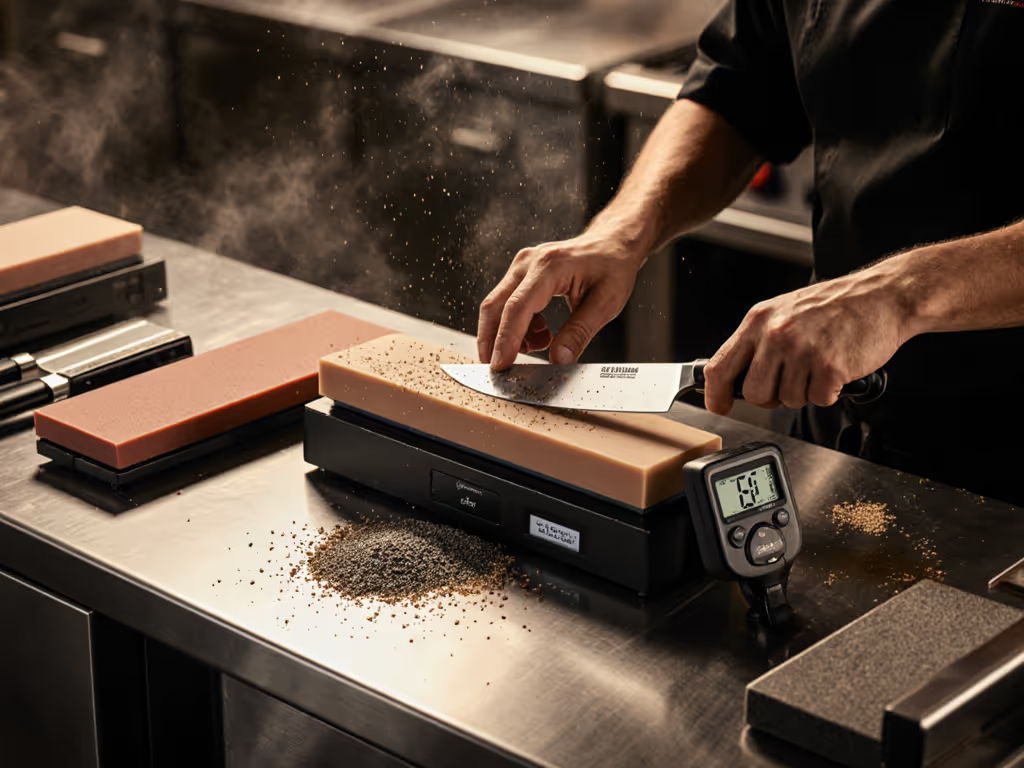
- Feedback focus: Listen for the subtle burr formation: a crisp 'tick' sound rather than a ragged scrape.
- Burr management: Eliminate the burr through alternating sides with progressively finer stones, never skipping grits.
I recall spending months chasing that elusive burr on a basic stainless gyuto during my apprenticeship, no magnification, just the whisper of steel on stone. When I finally heard the change in sound, the lesson wasn't about the stone; it was about developing sensitivity to steel's feedback. Consistency over speed, always.
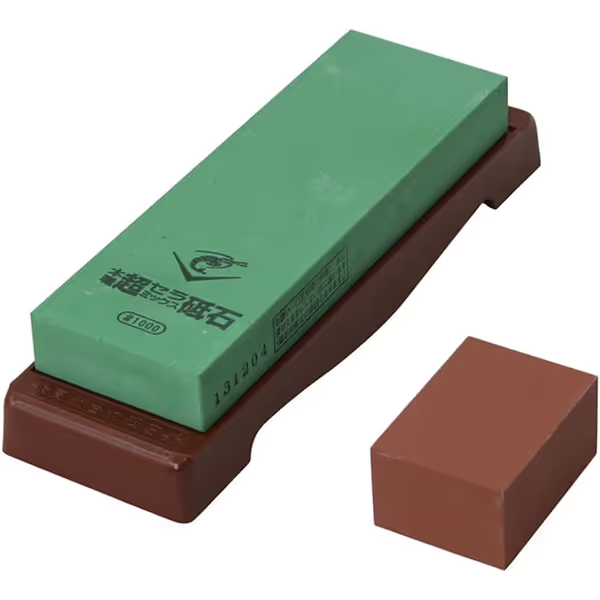
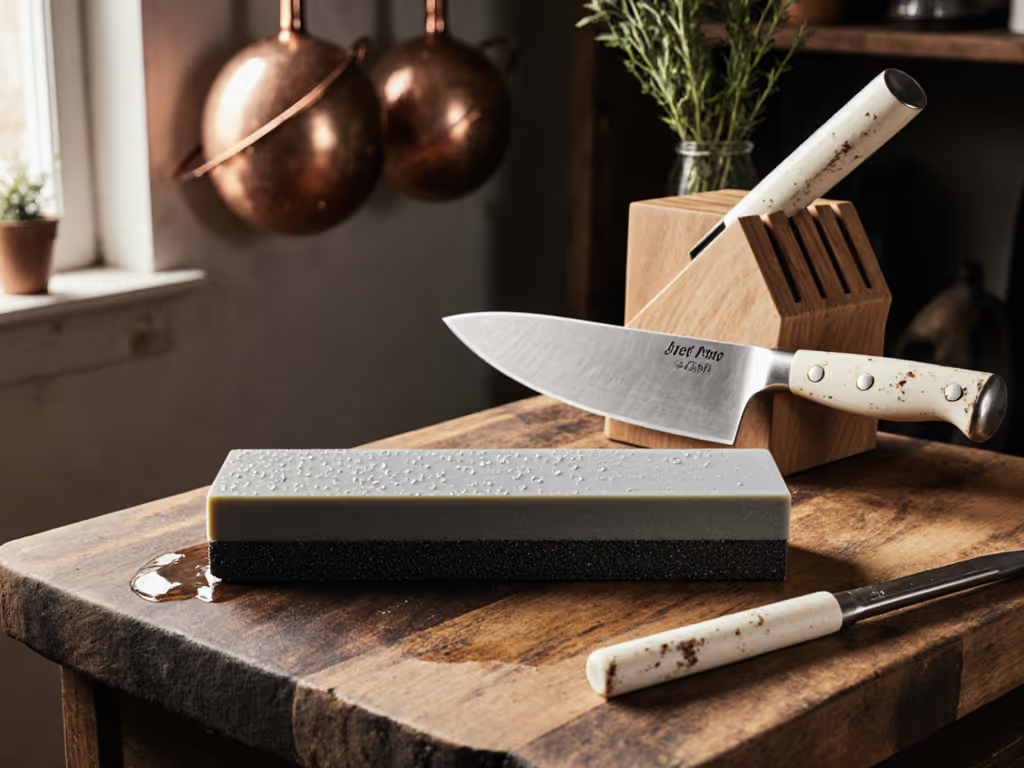
1000 Grit Ceramic Water Stone
Achieve razor-sharp edges with excellent feedback and consistent results.
$68
Grit1000
Grit1000
Pros
Delivers noticeably sharper knives, smooth as silk.
Excellent feedback, works as splash-and-go.
Ideal for medium grinding and refining edges.
Cons
Mixed opinions on long-term durability.
Value for money can be a divisive point.
This sharpening stone is excellent, particularly praising its 1000 grit quality and ability to make knives noticeably sharper. The stone is smooth as silk and works well as a splash and go stone, with one customer noting it provides excellent feedback during sharpening.
This sharpening stone is excellent, particularly praising its 1000 grit quality and ability to make knives noticeably sharper. The stone is smooth as silk and works well as a splash and go stone, with one customer noting it provides excellent feedback during sharpening.
Q: How does German knife care differ in practice?
German knife care accommodates thicker blades and softer steels through a different approach. Rather than delicate apex refinement, German sharpening emphasizes durable edge formation that withstands heavy use.
German technique essentials:
- Rocking motion: Maintaining contact throughout the blade curve by subtly adjusting the angle along the edge.
- Burr visibility: Checking for a visible wire edge rather than relying solely on auditory cues.
- Progressive grits: Fewer intermediate steps, with more emphasis on the coarse-to-medium transition.
- Honing frequency: Regular honing with a coarse steel (like the Kramer double-cut) maintains edge alignment between sharpenings.
German techniques accommodate the pronounced belly characteristic of Western blades. Each section of the blade requires slight angle adjustment to maintain consistent geometry. This is why the pull-through method often fails with quality German knives; the fixed angle cannot accommodate the blade's curvature. If you're unsure when to hone versus fully sharpen, read our Honing vs Sharpening guide.
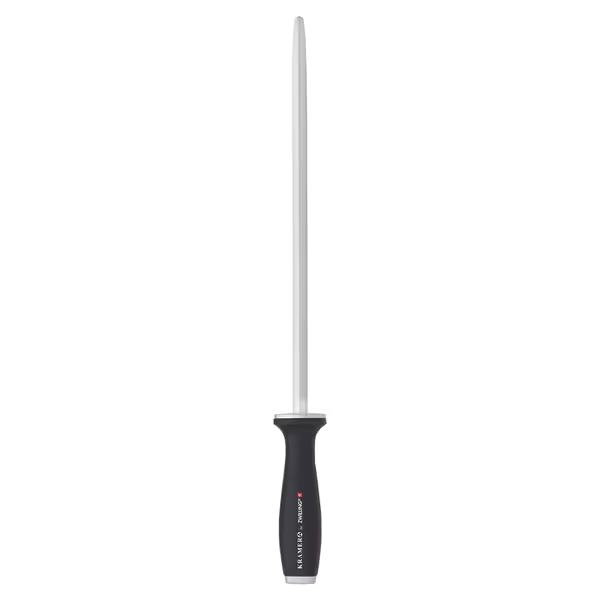
KRAMER by ZWILLING Honing Steel
Quickly restore fine edges on all your kitchen knives.
$74.95
Length12 inches
Length12 inches
Pros
Quickly refine and maintain sharp edges.
Works effectively on premium knives (Shun, Steelport).
Durable, high-quality construction.
Cons
Texture surface inconsistent (only on one side).
Some customers find it overpriced for a honing steel.
Customers find the honing steel to be of high quality, well-constructed, and effective, with one customer noting it works well with Shun and Steelport knives.
Customers find the honing steel to be of high quality, well-constructed, and effective, with one customer noting it works well with Shun and Steelport knives.
Q: What about American sharpening styles, how do they fit into this framework?
American sharpening represents a synthesis of approaches, reflecting our culinary melting pot. Many American knifemakers produce blades with Japanese-inspired geometry but Western-style double bevels. Consequently, American sharpening blends both traditions:
- Hybrid angles: 17-19 degrees per side for modern high-performance blades.
- System flexibility: Greater acceptance of guided systems for beginners while maintaining stone proficiency for advanced work.
- Steel-specific approaches: Recognizing that super-steels like S35VN require different abrasives than traditional carbon steels.
The American approach's strength lies in its pragmatism: using the right tool for the specific blade rather than adhering to tradition. This doesn't mean abandoning principles; rather, it means applying the universal law of sharpening: control the angle, steel dictates, to each unique situation.
Practical Integration: Choosing Your Cross-Cultural Approach
How to Determine Your Knife's Needs
Rather than identifying your knife by nationality ("Japanese" or "German"), focus on these measurable characteristics:
Assessment checklist:
- Measure spine thickness at heel (over 2.5mm = likely German profile).
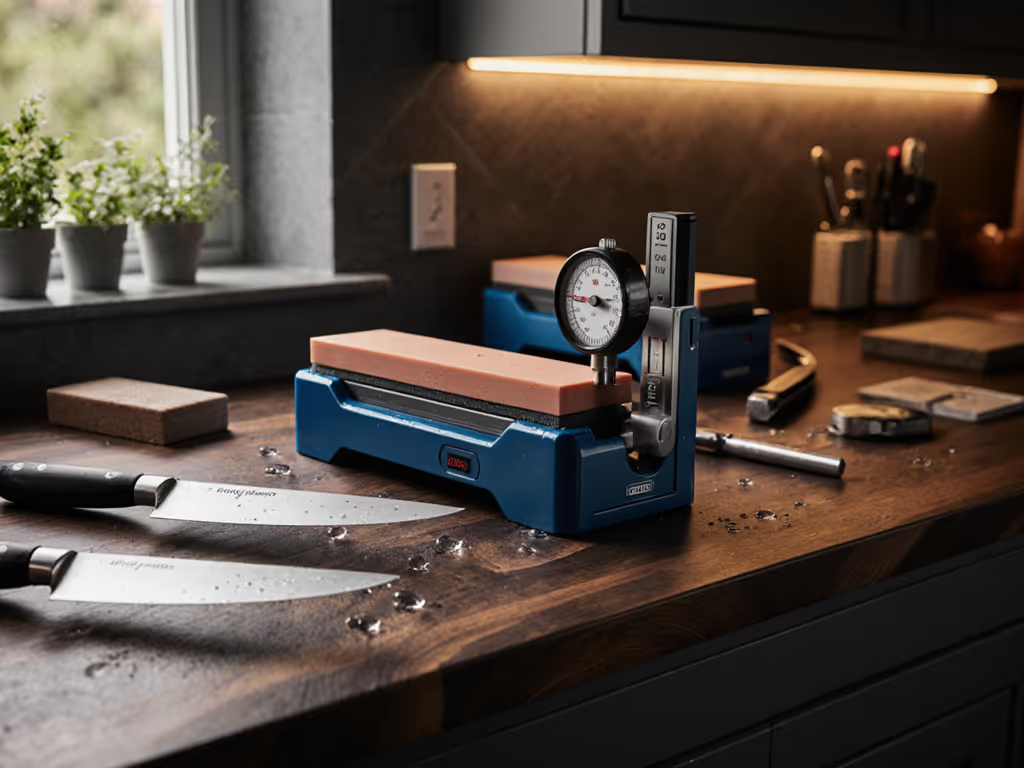
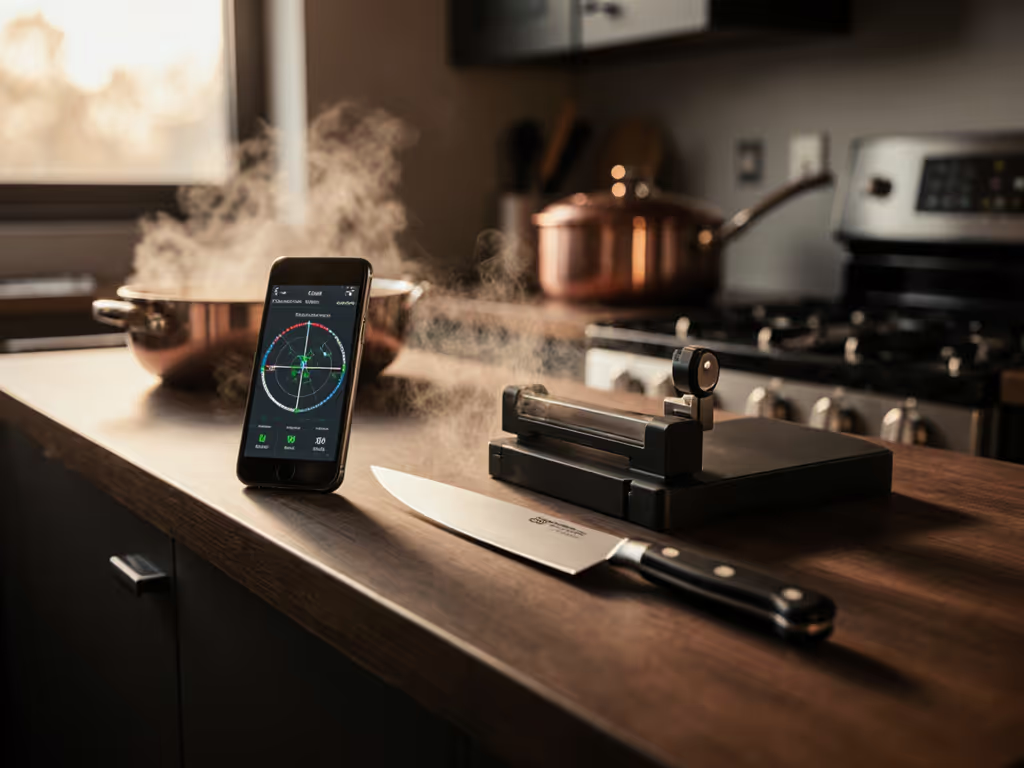
- Check edge angle (use an angle cube or visual assessment).
- Test steel hardness (if known, Japanese typically 60+ HRC).
- Examine blade curvature (pronounced belly = requires rocking motion).
- Determine single or double bevel (most Japanese kitchen knives are double-bevel outside specialty blades).
This objective assessment eliminates confusion from marketing terms and focuses on what matters: the physical properties of your blade.
The Progressive Pathway: From Beginner to Mastery
Regardless of cultural origin, all effective sharpening follows this progression:
- Establish consistent angle: Use angle guides initially, but transition to freehand as soon as possible.
- Create uniform bevel: Check for reflective strip along entire edge.
- Form controlled burr: Light pressure, consistent stroke count per side.
- Refine apex: Alternate sides with diminishing pressure.
- Polish edge: Final strokes on highest grit stone.
This sequence creates measurable checkpoints you can verify without specialized equipment. For choosing and sequencing stones, follow our grit progression in four steps. The burr formation step (feeling for that subtle wire edge along the entire blade) is your most critical feedback loop. Without this confirmation, you're merely polishing an unsharpened edge.
Tool Selection: Matching Equipment to Approach
Selecting the best sharpening tools requires matching them to your knives' physical properties, not their country of origin. Consider these factors:
For German-style knives (softer steel, thicker profile):
- Start with coarse stones (400-1000 grit) to efficiently remove metal.
- Use stones with slightly more aggressive cutting action.
- Consider Norton India stones or similar for initial shaping.
For Japanese-style knives (harder steel, thinner profile):
- Begin with medium stones (1000-3000 grit) unless significantly damaged.
- Choose precision stones like Naniwa Super Stones that cut cleanly without rounding.
- Higher grit finishing stones (8000+) yield dramatic results on hard steels.
For modern super-steel blades (regardless of origin):
- Use diamond plates for initial reshaping.
- Transition to fine ceramic stones for apex refinement.
- Avoid excessively hard stones that won't cut the steel.
Remember that no tool compensates for inconsistent angle. A $300 stone used with poor technique will underperform a $30 stone used with precision. If you're debating water stones, oil stones, or diamond plates, compare upkeep and performance in our stone maintenance guide. Technique always wins.
The Mastery Path: Beyond Cultural Divides
The true distinction between effective and ineffective sharpening isn't cultural: it is whether the practitioner understands the universal principles governing edge formation. I've seen German chefs produce surgical edges on Japanese knives and sushi masters breathe new life into battered German cleavers. What unites them is their respect for steel's feedback.
Develop your practice through deliberate repetition with clear checkpoints:
- Verify angle consistency with a marker test.
- Confirm burr formation along entire edge.
- Document stroke counts for each side.
- Test performance on consistent medium (tomato skin, paper).
This approach builds genuine skill rather than dependence on gadgets or systems. Mastery comes not from the tools we use, but the feedback loops we establish and honor.
Further Exploration
The journey toward sharpening proficiency continues beyond this article. For those ready to deepen their understanding, consider these next steps:
- Practice the marker test on various knives to visualize your contact points.
- Implement a simple sharpening log to track your progress.
- Experiment with different push angles on Japanese blades to feel the difference in burr formation.
- Try sharpening a single knife with both Japanese push method and Western pull method to feel the difference.
True understanding comes through practice with clear feedback, not through theoretical knowledge alone. As you refine your technique, remember: precision isn't about perfection on the first try, but measurable improvement with each stroke. The stone provides honest feedback; our job is to listen closely and adjust accordingly.
Related Articles